Building a custom pool in Boynton Beach
Boynton Beach spreads across two different landscapes on the Palm Beach County coast: older blocks near downtown and the Intracoastal Waterway, and the large western communities wrapped around canals and man-made lakes. A Boynton Beach mailing address does not always mean the city has jurisdiction — many western neighborhoods sit in unincorporated Palm Beach County — so the first job on any pool is confirming which building department will review it. The ground is the second: sandy soil over shallow limestone, with groundwater never far below the surface.
Permits and local rules
Swimming pools and spas are on the City of Boynton Beach's list of work that needs a building permit, along with fences and pool barriers, screen enclosures, and the electrical and plumbing systems that serve them (Building Department). New applications are submitted and tracked through the city's SagesGov portal, which also handles plan review and inspections (Sages Permits). The city's adopted amendments to the Florida Building Code set out a pool inspection sequence: steel, bonding, main drain and plumbing before the shell; underground electrical and a pressure-tested piping inspection; the deck before surfacing; and final piping, final electrical and a permanent barrier inspection before the pool is filled (local amendments).
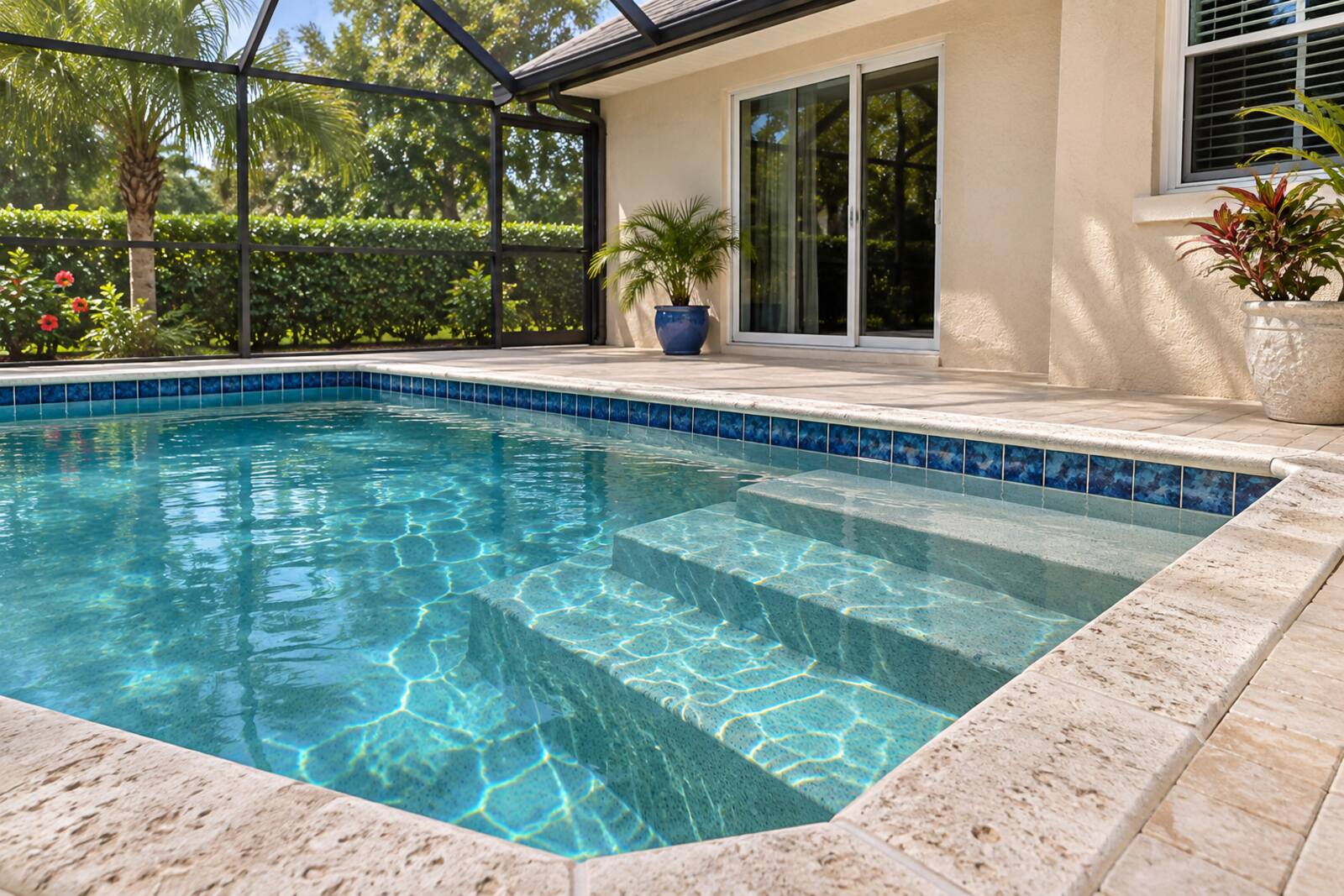
Florida's Residential Swimming Pool Safety Act (Chapter 515) puts the barrier in the permit, not at the end. The city's own form asks the contractor to choose one: an ASTM F1346-91 safety cover, a continuous mesh child barrier, a continuous fence, wall or screen enclosure (with exit alarms on doors and windows where the house wall forms part of the barrier), or approved alarms (safety form). If the address is outside city limits, Palm Beach County permits the pool instead. Homeowner association architectural review is a separate approval and can run before or alongside the building permit.
Lots, soil, water and season
A shallow water table is normal here. Excavations are commonly dewatered while the shell is built, and gunite or shotcrete shells are engineered for hydrostatic pressure, with relief valves so an emptied pool does not lift. Western lots on Lake Worth Drainage District canals and community lakes add lake setbacks and drainage easements that decide where the pool, deck and screen enclosure can sit. Closer to the coast, salt air shortens the working life of standard pumps, heaters and fasteners, so equipment specification matters as much as the shell.
Swimming is close to year-round, but construction is seasonal. The drier winter and spring, roughly November through May, is the calmest window for excavation, shell work and inspections. The summer wet season and Atlantic hurricane season, June through November, can flood an open dig, delay deck and enclosure work, and push inspections back after a named storm.
What drives the price and what to ask
Cost in Boynton Beach is shaped by dewatering, possible limestone excavation, a wind-engineered screen enclosure, deck material and finishes, salt-air equipment, and how easily equipment can reach the backyard.
Questions to ask each custom pool builder:
- Is my address inside Boynton Beach city limits or unincorporated Palm Beach County, and which permit will you pull?
- Will you submit through SagesGov and handle the electrical, plumbing and barrier sub-permits?
- Is dewatering included in the quoted price, and how is limestone excavation billed if the dig hits rock?
- Which Chapter 515 barrier option fits my yard, and who signs and installs it?
- Do you coordinate HOA architectural review and any lake or drainage-easement approval?
- What equipment do you specify for salt air, and what does the warranty cover?
- Is the schedule planned around the wet season, and what happens to the timeline after a hurricane?