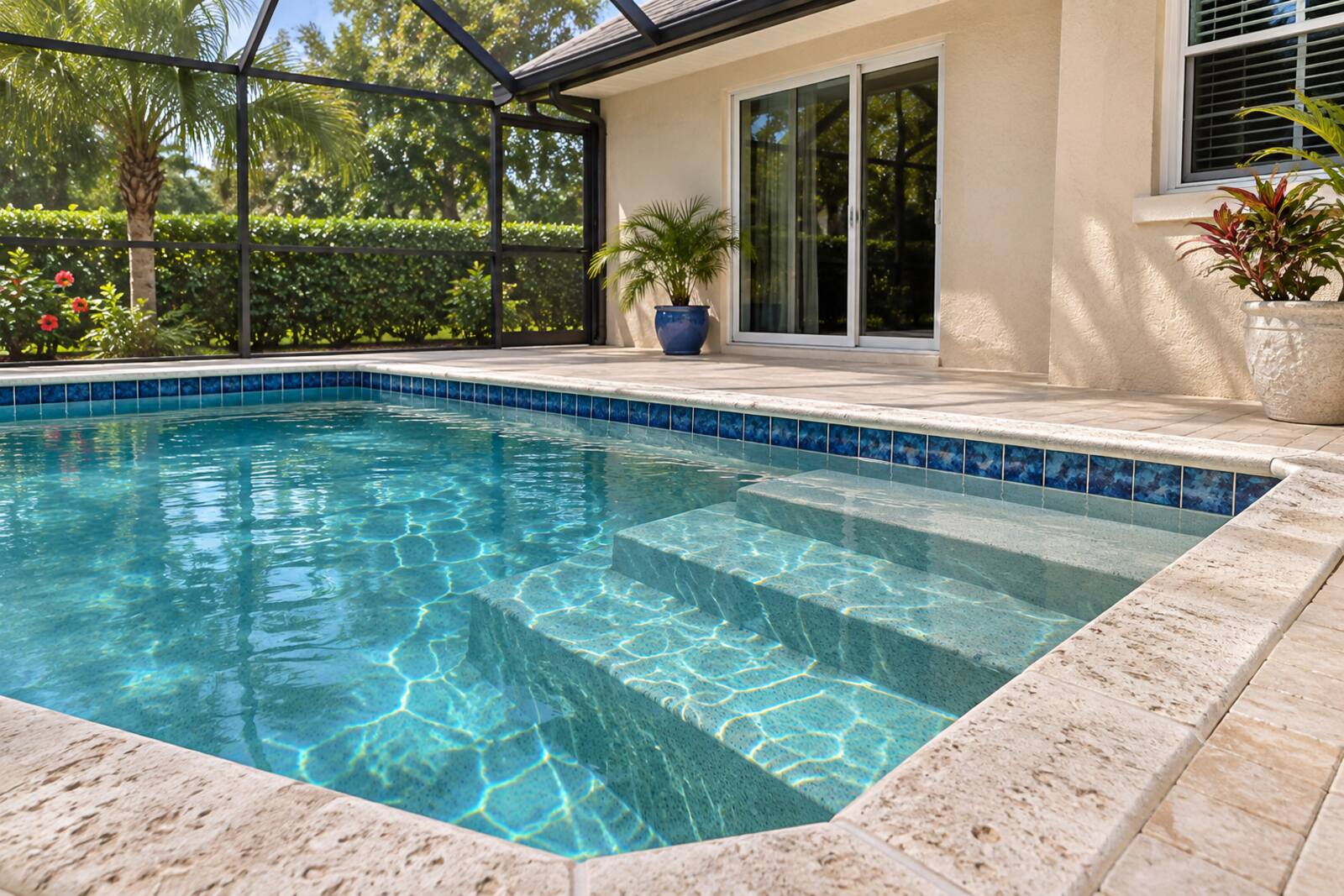
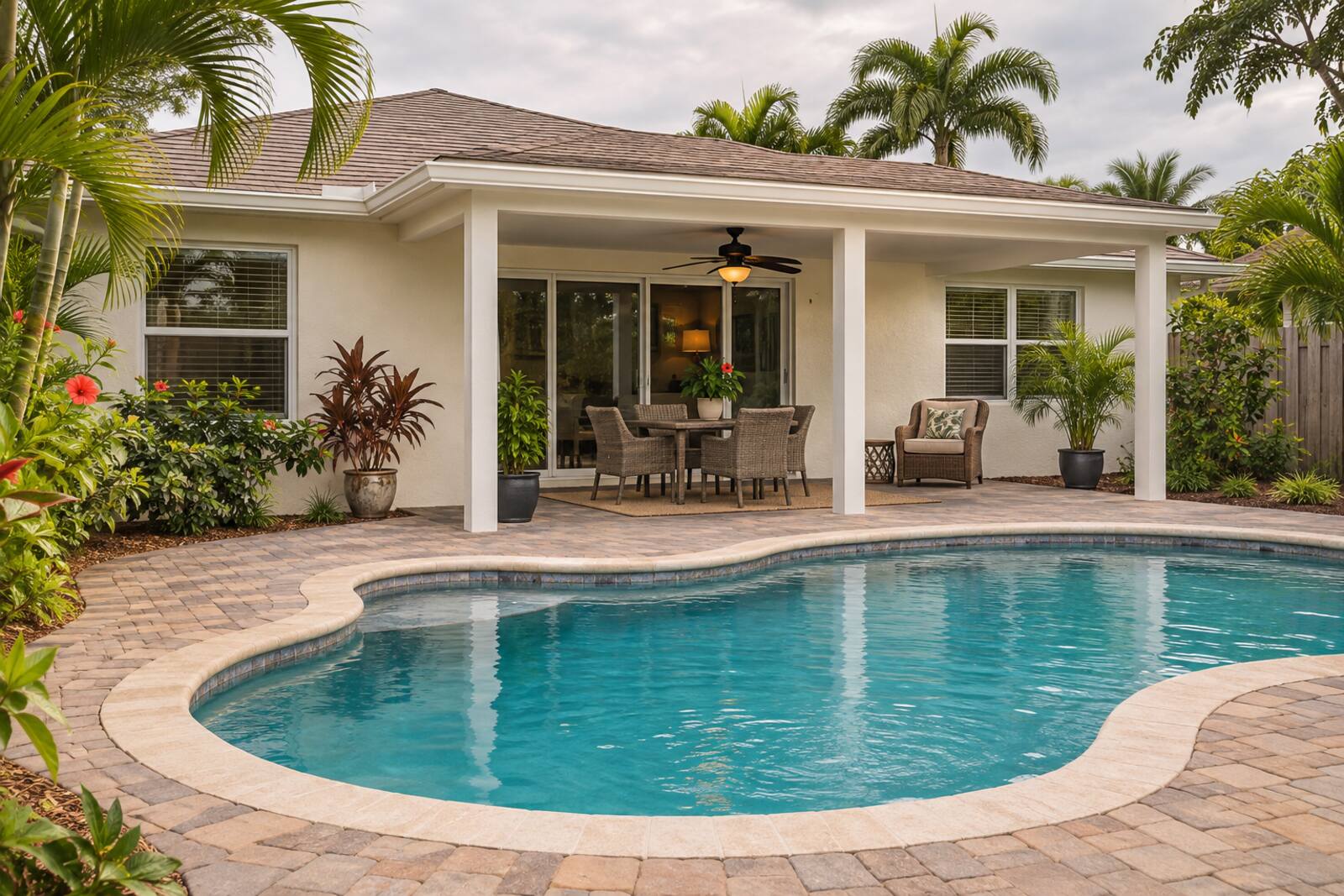
Building a pool in Clearwater
Clearwater sits on Florida's Gulf coast in Pinellas County, split between mainland neighborhoods of 1950s-to-1970s ranch homes, a redeveloping downtown, and the barrier-island beaches that draw the crowds. For a buyer considering a custom inground pool, Clearwater presents small mature lots inland, tighter and more exposed lots on the island, and a permit process that runs on a step-by-step city checklist. The key local factors are the city's Planning & Development review, utility easement clearance with Duke Energy, impervious surface limits, sandy coastal soil with a shallow water table, and flood zones that matter on both the island and low mainland blocks.
Permits and bylaw rules
The city's Planning & Development Department handles pool permits, and Clearwater publishes a step-by-step Residential In-Ground Pools/Spas & Enclosures checklist that names every document the city wants. The application needs two sets of signed and sealed construction plans, a notarized Residential Swimming Pool, Spa or Hot Tub Safety Act form, a completed Impervious Surface Ratio worksheet, and — before clearing starts — a clearing and grubbing permit. If the contract price including materials and labor exceeds $5,000, the contractor must file a Notice of Commencement. A screen enclosure over the pool is a separate permit checklist with its own survey requirements.
Two Clearwater-specific steps deserve attention. First, the checklist requires a "No Conflict Letter" from Duke Energy, which confirms the pool will not sit on a utility easement; Duke may charge a small fee, and a conflict can force a redesign. Second, only licensed contractors can file pool and spa applications through the city's online permitting system (Accela); homeowners file on paper. The city's building permit page notes that plan review can take four to 15 days depending on the project, and a permit expires if six months pass without a passed inspection. Florida law requires a compliant pool safety feature — barrier, cover, alarms or door exits — before final inspection.
Lots, soil and climate
Mainland Clearwater neighborhoods such as those north and east of downtown are typically small city lots with mature trees and older utilities; the island side is denser, salt-exposed, and closer to the water table. Before anything else, confirm the address is actually inside city limits through the Pinellas County Property Appraiser, because unincorporated county pockets sit inside the Clearwater map and answer to Pinellas County permitting instead. Soils are sandy and generally easy to excavate, but the coastal water table is shallow, and low blocks may need dewatering while the shell is built. The city's Floodplain Management page lets buyers check a property's flood zone and base flood elevation; properties in mapped zones face elevation rules that affect deck height and equipment placement, and Clearwater's CRS participation earns residents a discount on flood insurance.
The Gulf keeps winters mild — January afternoons usually reach about 70°F — so an unheated pool runs comfortably from late spring into fall, and a heat pump stretches that to year-round. The wet season runs roughly June through September with afternoon thunderstorms, and hurricane season (June through November) brings the chance of storm-watch delays, especially for island jobs where contractors watch the forecast closely.
What drives the price and what to ask
Key cost factors in Clearwater include:
- Barrier-island lots: Tighter access, salt-air corrosion on steel and equipment, stricter flood elevation rules, and storm-scheduling risk all add cost and time compared with mainland lots.
- Utility easements: The Duke Energy No Conflict Letter exists because pools cannot encroach on easements; a conflict discovered late means redesign fees.
- Impervious surface limits: The city's Impervious Surface Ratio worksheet caps how much of the lot can be covered, which can limit deck size, screen enclosures, and the pool footprint itself.
- Separate enclosure permit: A screen or pool enclosure needs its own permit and survey markup; bundling both applications at design time avoids a second review cycle.
- Groundwater and soil: Sandy soil excavates quickly, but shallow groundwater on low mainland or island lots can require dewatering pumps during shell construction.
- Older neighborhoods: Mature tree roots, legacy utilities, and narrow side-yard access on small city lots add excavation and access costs.
Questions to ask each custom pool builder:
- Will you confirm with Planning & Development whether this address is inside Clearwater city limits or in unincorporated Pinellas County before we start?
- Do you obtain the Duke Energy No Conflict Letter and check for easements before finalizing the pool location?
- How much impervious surface headroom does this lot have under the city's ISR worksheet, and how does that cap the pool and deck design?
- Do you file the pool permit, the screen enclosure permit, and the Notice of Commencement, and how long is your current plan-review turnaround with the city?
- Does this lot's flood zone or base flood elevation affect deck height, equipment pad placement, or fencing?
- Is site dewatering included in the base quote if we hit the water table during excavation?
- On an island or coastal-exposure lot, what finishes and equipment do you recommend for salt air?