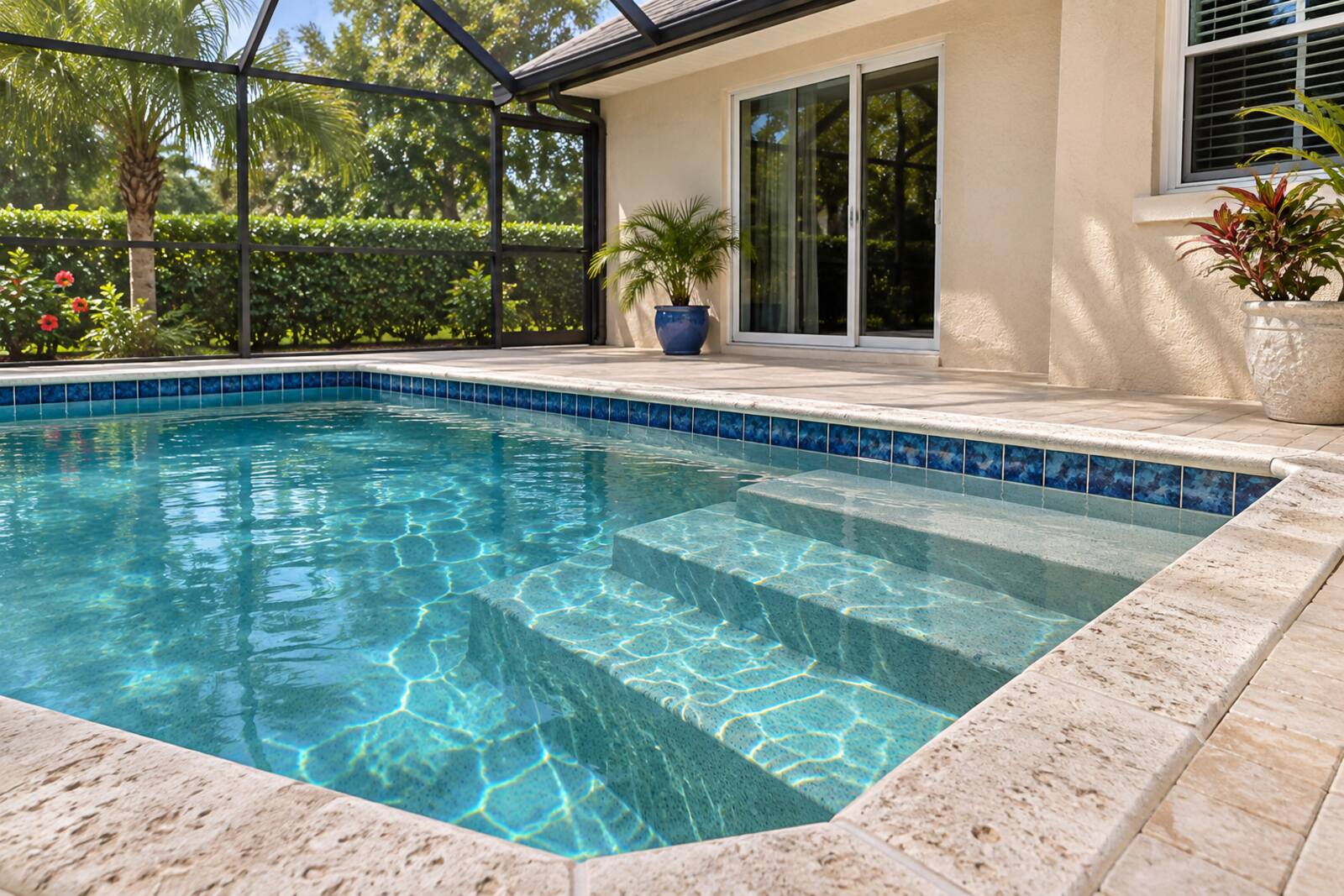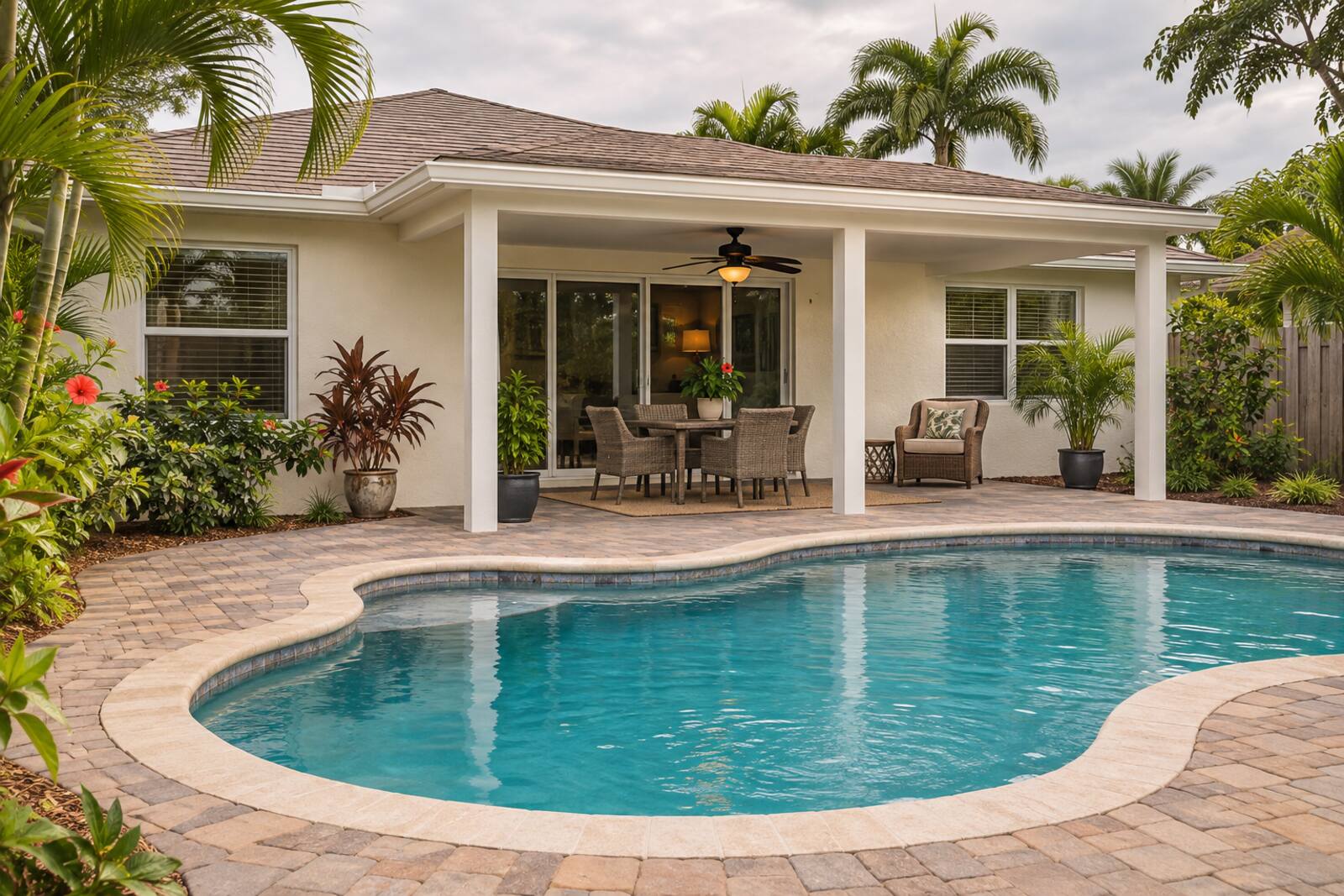
Building a custom pool in Deltona
Deltona is the largest municipality in Volusia County, situated between Orlando and Daytona Beach along the northern shores of Lake Monroe. Known for its rolling sandhills, established single-family neighborhoods, and freshwater lakes such as Lake Gleason and Lake Dupont, the city offers expansive suburban properties well suited for outdoor living. Installing a custom inground swimming pool in Deltona allows homeowners to enjoy Central Florida's warm climate, whether constructing a freeform gunite pool integrated with a paver patio, a compact plunge pool, or a screened pool with a spillover spa. Building here requires navigating local terrain, karst geological conditions, strict septic system clearance rules, and municipal permitting standards.
Permits and local codes
Swimming pool construction in Deltona is regulated under the Florida Building Code and local ordinances administered by the City of Deltona Building Services Division. The city requires permits for all new residential inground pools, covering structural engineering, electrical wiring, plumbing, and safety barriers:
- Permitting information and portal access can be found through the City of Deltona Building Services Division.
- Downloadable applications, including the In-Ground Pool Permit package and subcontractor forms, are available on the Deltona Permitting Forms page.
Key regulatory requirements include:
- Zoning Setbacks: In Deltona's single-family districts, swimming pools are allowed only in the rear and side yards and cannot sit forward of the house (Sec. 110-827, city code on Zoneomics). Side and rear setbacks depend on the zoning district; confirm them with the city before design. Waterfront parcels bordering lakes or canals are subject to additional shoreline setbacks and wetland buffers.
- Septic System and Well Clearances: Many Deltona homes use septic tanks and drainfields, and the city's code bars individual wells except for irrigation, sprinkler systems, swimming pools, or air conditioning while the city water utility operates (Sec. 110-826, city code on Zoneomics). Florida's septic rules keep a septic tank or drainfield at least 5 feet from a pool wall, and a drainfield cannot sit under a deck or patio (Rule 62-6.005, F.A.C.). If a lot has limited space, relocating the septic tank or drainfield may be required before construction can begin.
- Easements: Pools, decking, and equipment pads cannot encroach into dedicated utility, drainage, or roadway easements.
- Pool Safety Features: Under the Residential Swimming Pool Safety Act (Chapter 515, Florida Statutes), a new residential pool must have at least one of five safety features to pass final inspection (s. 515.27): a barrier at least 4 feet high with outward-opening, self-closing, self-latching gates (s. 515.29); an approved safety cover meeting ASTM F1346 (s. 515.25); exit alarms rated 85 dB A at 10 feet on doors and windows that open directly to the pool; self-closing, self-latching devices on those doors with the release at least 54 inches above the floor; or a pool alarm certified to ASTM F2208. Ask which feature your quote includes and who installs it.
- Notice of Commencement: Before the first inspection, a Notice of Commencement must be recorded with the Volusia County Clerk of the Court and posted on-site.
Lots, soil and water table
Deltona's landscape is defined by rolling sandhill topography. Soil across the city consists predominantly of deep, well-drained fine sands. While sandy soil allows for fast excavation during dry weather, the rolling terrain frequently requires site grading, engineered retaining walls, or terraced deck layouts to accommodate slope changes across the backyard.
Underlying limestone formations throughout Central Florida mean that karst features and sinkholes are potential geological considerations. Experienced builders perform soil probing or compaction testing to ensure a stable subgrade before pouring concrete shells. In upland areas, the water table sits deep below the surface, but properties bordering Lake Monroe or interior lakes experience high seasonal groundwater that requires active dewatering during excavation and hydrostatic relief valves in the pool shell.
Swim season and climate
Deltona experiences a humid subtropical Central Florida climate with greater seasonal temperature variation than South Florida. The comfortable unheated swimming season extends from late April through October, when daytime temperatures reach the 80s and 90s. Winter months from December through February bring periodic cold fronts that drop overnight temperatures into the 40s and upper 30s. To enjoy swimming year-round or extend the season from March through November, Deltona pool owners typically install a high-efficiency electric heat pump or gas heater.
Screen enclosures (pool cages) are widely installed throughout Deltona to keep out heavy seasonal oak leaves, pine needles, and insects. The dry winter and spring months (November through May) offer the most reliable weather window for excavation, gunite application, and deck paving, avoiding the daily afternoon thunderstorms of the summer wet season.
What drives pool cost and what to ask
Custom pool pricing in Deltona is shaped by site grading and retaining walls on sloping lots, septic tank or drainfield clearances and potential relocations, screen enclosure engineering, and heating equipment.
Questions to ask each custom pool builder:
- Do you manage all permit filings through the Deltona Building Services Division, including structural, electrical, and barrier permits?
- How does your site plan verify the required separation from our septic tank, drainfield, and any well?
- Does our lot's topography require retaining walls, engineered fill, or customized drainage grading?
- Do you perform soil probing or compaction testing to account for Deltona's sandy ridge and karst geology?
- Which Chapter 515 safety feature is included in your base quote, and who handles its permitting and installation?
- Do you record and post the Volusia County Notice of Commencement on our behalf?
- What heating system do you recommend for extending the swim season through Central Florida winter temperatures?
- What written warranties do you provide on the structural gunite shell, interior plaster, plumbing, and equipment?