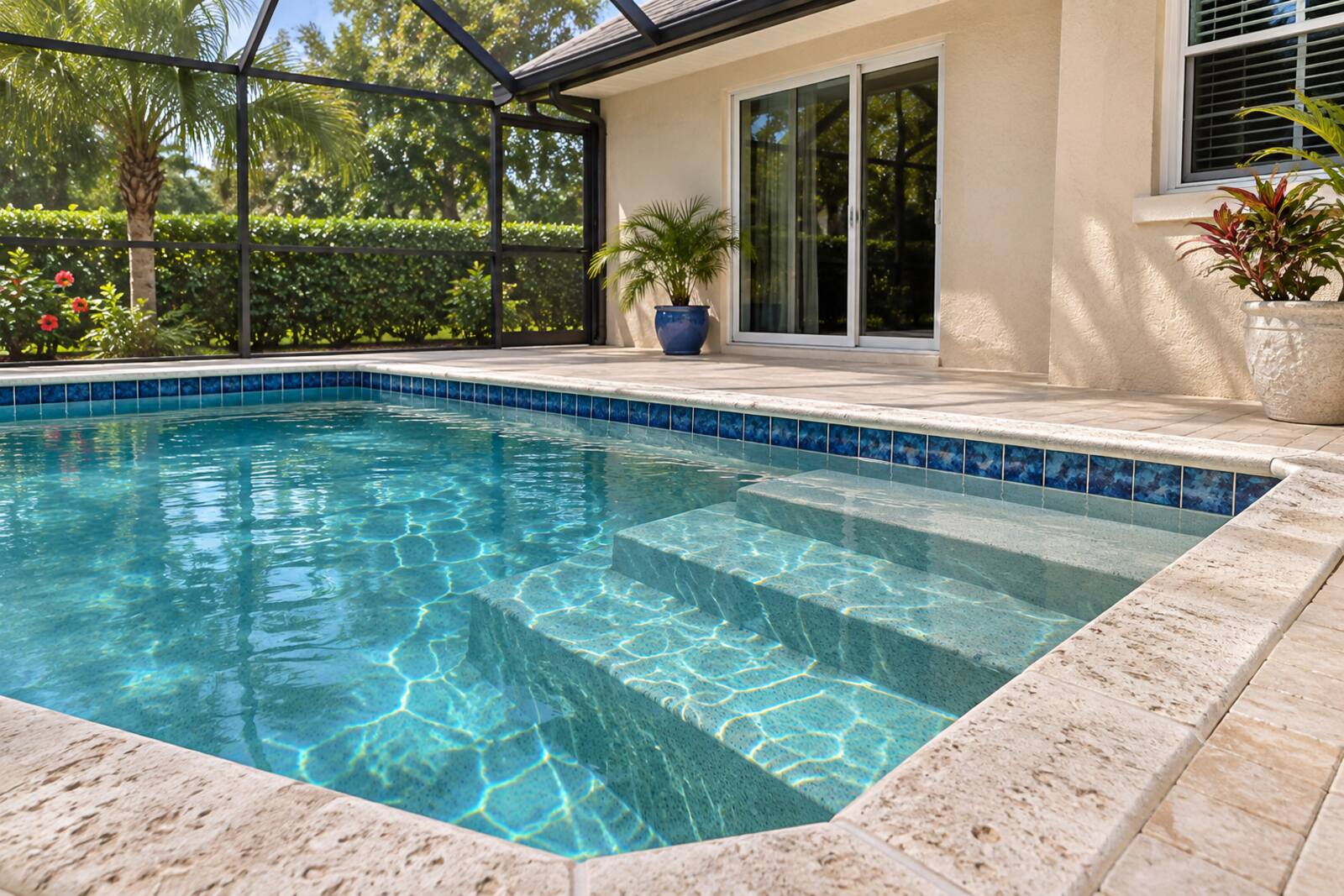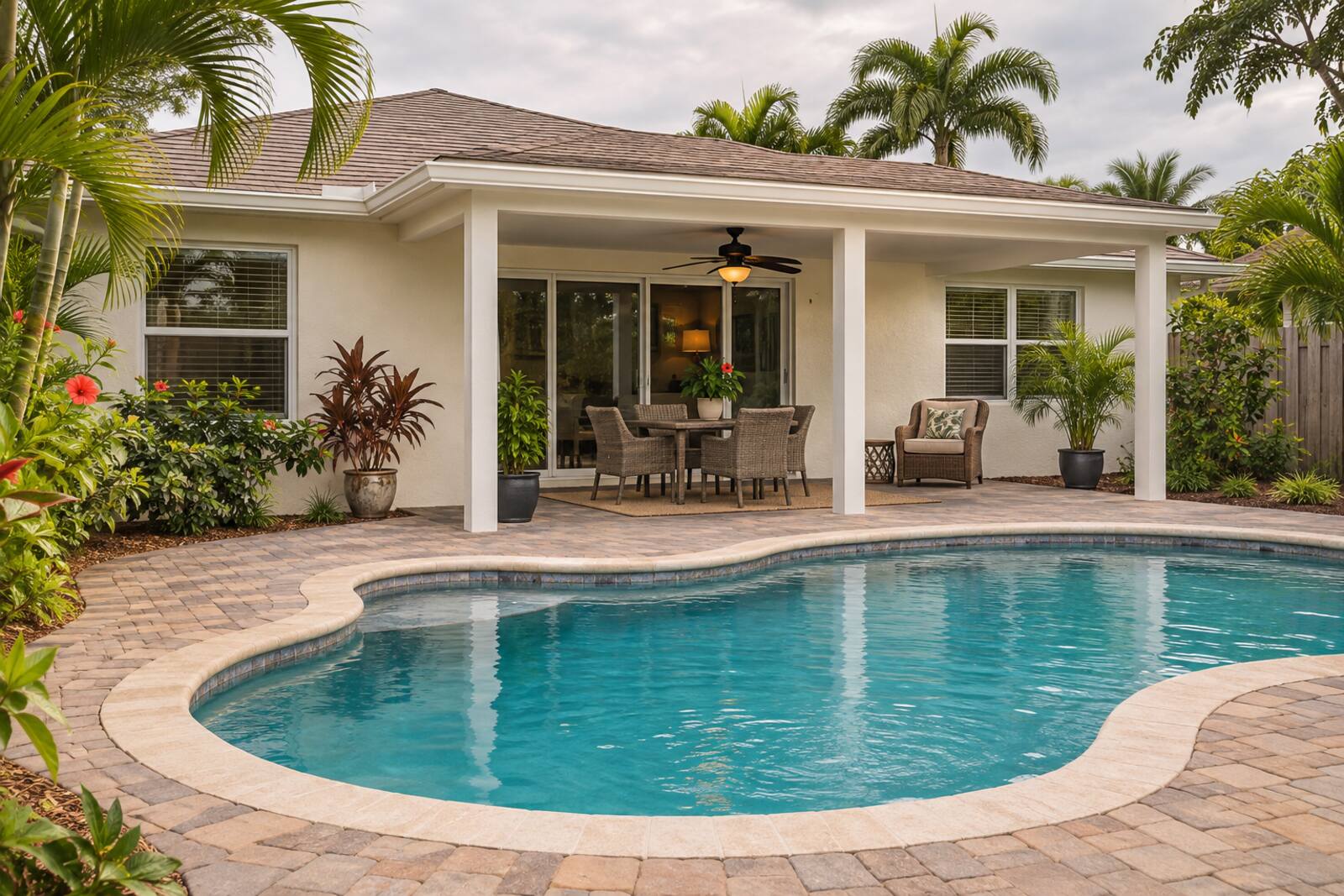
Building a custom pool in Fort Pierce
Fort Pierce (population 52,588), the county seat of St. Lucie County on Florida's Indian River Lagoon, blends historic downtown, waterfront neighborhoods, and growing inland communities. Custom inground pools here are built around lagoon views, outdoor dining, and an Atlantic coastal climate allowing nearly year-round swimming.
Permits and local codes
Fort Pierce and St. Lucie County operate under the Florida Building Code, divided by municipal versus county jurisdiction:
- Within city limits, the City of Fort Pierce Building Department manages plan review, permitting, and inspections, with digital applications handled through the Enterprise Permitting & Licensing (EPL) Civic Access portal.
- For parcels in unincorporated St. Lucie County, permitting is coordinated through St. Lucie County Permitting & Zoning. Applicants submit a scaled site plan, property survey, engineering calculations where required, a pool safety affidavit, and building permit applications.
- The Florida Building Code governs structural, electrical, and plumbing standards, while coastal and lagoon-front parcels may require FEMA flood-zone review.
Key regulatory items to confirm:
- Jurisdiction: Verify whether the parcel lies inside City of Fort Pierce limits or unincorporated St. Lucie County — permit portals, fees, and zoning rules differ.
- Site plan and survey: A scaled site plan displaying boundary dimensions, setbacks, and pool placement along with a certified property survey is required by both jurisdictions.
- Engineering: Flat, sandy lots bordering the Indian River Lagoon frequently require stamped engineering for soil load-bearing, drainage, and flood-zone elevation.
- Setbacks: Accessory-structure setbacks apply to swimming pools under City of Fort Pierce and St. Lucie County zoning ordinances. Exact distances depend on specific zoning designations, canal rights-of-way, and recorded subdivision plats.
- Pool safety features: Under the Florida Residential Swimming Pool Safety Act (s. 515.27, Florida Statutes), every new residential swimming pool must meet at least one of five safety features to pass final inspection and receive a certificate of completion: (a) a barrier meeting s. 515.29 (at least 4 feet high with outward-opening, self-closing, self-latching gates); (b) an approved safety pool cover; (c) exit alarms rated 85 dB A at 10 feet on doors and windows with direct pool access; (d) self-closing, self-latching devices on direct-access doors with release mechanisms at least 54 inches above the floor; or (e) an in-pool alarm certified to ASTM Standard F2208.
- Subdivision plats: Master-planned communities frequently enforce plat covenants restricting pools to rear yards or requiring HOA architectural review.
- Flood zones: Low-lying and lagoon-front lots can sit in AE or VE flood zones, requiring elevated equipment pads and flood-resilient construction.
- Notice of Commencement: A Notice of Commencement must be recorded with the St. Lucie County Clerk of Court and posted on-site before construction begins.
Lots, soil and water table
Fort Pierce rests on the flat coastal plain of the Indian River Lagoon — sandy soils, high seasonal water tables, and localized coquina or hardpan formations:
- Excavation: Digging through sandy soil is fast, but high groundwater near the lagoon often necessitates wellpoint dewatering during excavation and steel placement.
- Water table: Rainfall, tidal movements, and drainage canals raise the local water table. Hydrostatic relief valves in the main drain sump help prevent empty shell uplift.
- Soil variation: Inland parcels west of US-1 feature firmer sand and hardpan layers, while lagoon-side ground can have loose, moisture-sensitive soils requiring shoring.
- Drainage: Flat terrain makes deck grading and drainage swales vital to keep heavy storm runoff from pooling against the shell or neighboring parcels.
- Salt exposure: Lagoon-side lots experience coastal salt air; pumps, automation, and metal hardware should specify corrosion-resistant marine finishes.
Swim season and climate
Fort Pierce enjoys a subtropical climate supporting an extended swim season:
- Swim season: April through November offers comfortable unheated swimming; winter months dip into the 60s, so heat pumps or gas heaters are common for year-round comfort.
- Build window: October through May provides dry, predictable curing conditions. Summer thunderstorm season (June through September) can flood open excavations.
- Freeze risk: Freezes are rare but brief cold snaps can occur in January; contractors must protect exposed plumbing during extreme drops.
- Hurricane season: June through November; screen enclosures and pool equipment pads must be engineered to Florida Building Code wind standards.
What drives pool cost and what to ask
Pricing reflects coastal engineering (wind-rated enclosures, flood-zone elevation, marine-grade equipment), dewatering in high water tables, and custom lagoon-view upgrades like vanishing edges, spas, and travertine decking.
Questions to ask builders:
- Do you confirm municipal jurisdiction (City vs. County) and check recorded plat and HOA requirements before design?
- Do you include the scaled site plan, property survey, and required engineering in the base quote?
- Is wellpoint dewatering included if high groundwater appears during excavation?
- How is unexpected hardpan or loose sandy ground handled and billed?
- Does your contract include all required boundary, spot, and elevation surveys for permitting?
- Are screen enclosures engineered and stamped for Florida Building Code wind loads?
- Which Chapter 515 safety feature is included in your quote, and who installs it?
- Do you record the Notice of Commencement and manage all inspection milestones?
- What structural warranty covers the shell, finish, plumbing, and equipment?