Building a custom pool in Miami Beach
Miami Beach is a dense barrier island between the Atlantic Ocean and Biscayne Bay, with a resident population of roughly 82,000 and a far larger seasonal crowd. Most lots are small, access often runs through an alley or a narrow side yard, and much of the island sits at or within a few feet of sea level. The city is inside Florida's High-Velocity Hurricane Zone, and groundwater is frequently at or near the surface, so flood elevation, salt air and dewatering shape a pool project here before finishes ever come up.
Permits and local rules
The City of Miami Beach Building Department permits pools inside city limits, not Miami-Dade County. Applications go through the city's Civic Access online portal (Building Permits). The city's Residential New Pool permit checklist is unusually broad: it calls for digitally signed and sealed drawings, a signed and sealed topographic and boundary survey, architectural, structural, electrical, mechanical, plumbing and pool plans, a landscaping plan and a tree survey reviewed by the Urban Forestry Group, and a site plan showing setbacks, lot dimensions, existing and proposed structures and grade. Elevations must be shown in NGVD values for base flood elevation, grade, adjusted grade and freeboard. Planning Board approval may be required before a building permit can even be submitted, and reviews can include Environmental, Planning, Public Works and Urban Forestry alongside the building trades. Inspections include the Notice of Commencement certificate, special inspection of piles and foundation, planning final and building final.
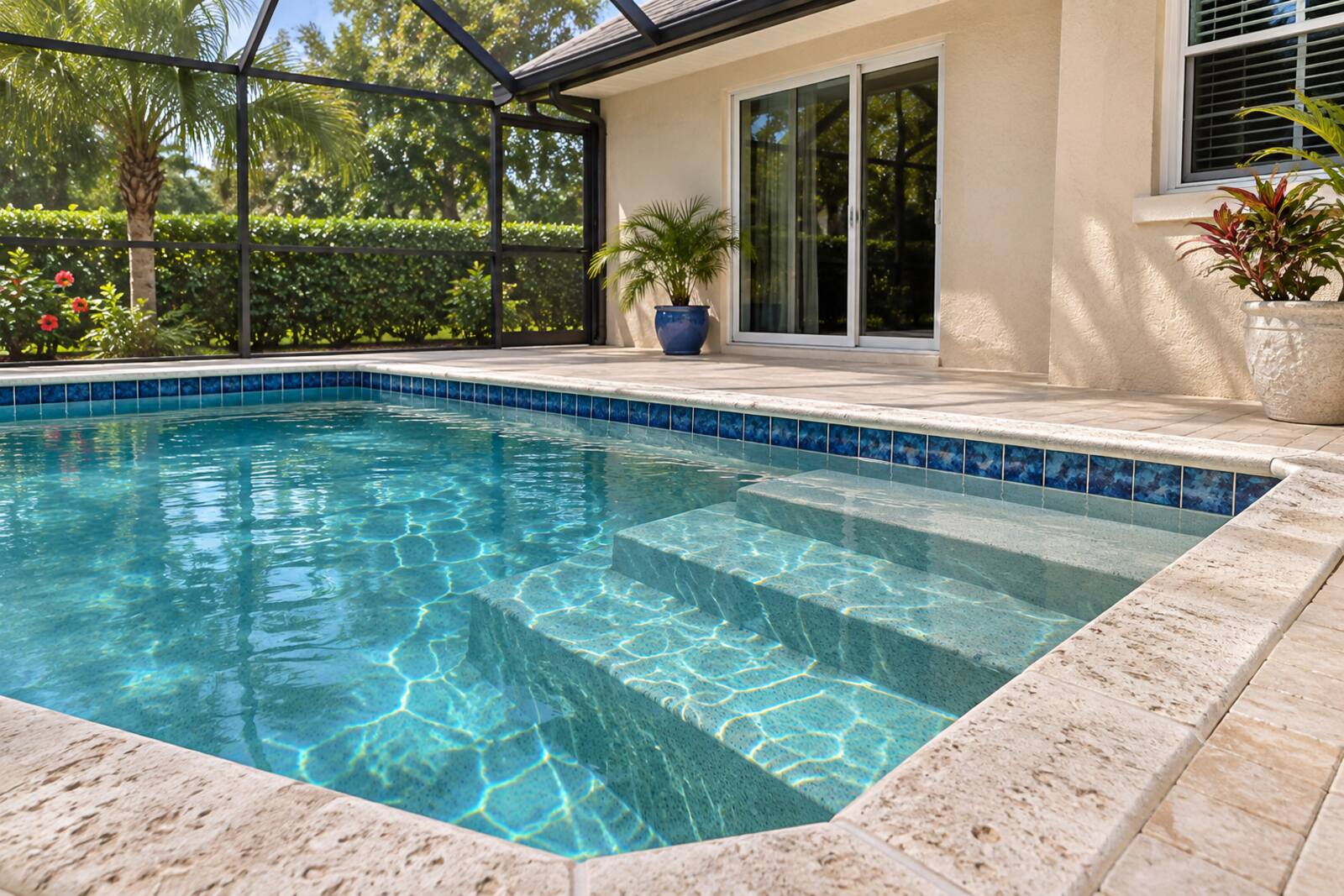
Every pool also needs an approved safety barrier. In Miami-Dade the barrier must stand at least 48 inches above grade on the side facing away from the pool, under County Code 8C-4 and 33-12 and Florida Statutes 515.27 and 515.29; final electrical and barrier inspections must pass before the pool is filled (Miami-Dade pool permits, interactive permit guide). Because the city is in the HVHZ, screen enclosures and any glazing near the pool must use impact-rated, product-approved systems under Florida Building Code Sections 1615–1626.
Lots, soil, water and season
The island is built on porous oolitic limestone, and the water table can reach the surface during the wet season and king tides. Excavations usually need dewatering, and shells need relief valves and enough structural weight or engineering to resist uplift when the pool is drained. Salt air attacks standard pumps, heaters, fasteners and finishes. Tight lots, alley access, historic-district review and floodplain rules can rule out large equipment or standard shell sizes.
Swimming is genuinely year-round, but the build calendar is not. The drier winter and spring months are the steadiest window for excavation, shell work and inspections. Hurricane season, June through November, can stop work, flood a dig and delay enclosure installations and post-storm inspections for weeks.
What drives the price and what to ask
Cost here is driven by dewatering and limestone excavation, flood-elevation and freeboard design, HVHZ-rated enclosures and impact products, corrosion-resistant equipment for salt air, tight-access logistics and any historic or planning review.
Questions to ask each custom pool builder:
- Will you pull the pool permit plus the electrical, plumbing and enclosure sub-permits through Civic Access, and are you set up for the city's plan reviews?
- Is my lot likely to need dewatering or rock work, and are those priced in the contract or billed as extras?
- How does the design meet base flood elevation and freeboard, and who supplies the elevation certificate?
- Which 48-inch barrier option will the plans show, and who installs the gates, alarms or screen enclosure?
- Does your enclosure use HVHZ-approved, impact-rated products for Miami Beach?
- What equipment do you specify against salt air, and what does the warranty cover on corrosion?
- Can your equipment and crane reach my lot, and what is the plan if they cannot?
- How do you schedule around hurricane season, and what happens after a named storm?