Building a pool in Miami
Miami packs about 500,000 people — millions more across the metro — onto a limestone ridge between the Everglades and Biscayne Bay, on lots far tighter than anywhere else in Florida. That geology and that density shape every pool project: excavation often means cutting rock, backyard access is usually through a side gate, and Miami-Dade is one of only two counties in the state that build under the High-Velocity Hurricane Zone code. Inside city limits the City of Miami runs its own building department; most of the metro's surrounding addresses permit through Miami-Dade County's building division.
Permits and local rules
Miami-Dade County publishes its pool requirements on its swimming pool permits page. The essentials:
- The application package. A completed building permit application (the yellow form) under Category 55 with the pool's total square footage, a contact sheet, and detail drawings signed and sealed by an architect or engineer.
- Sub-permits follow. Once the pool permit issues, separate electrical and plumbing/gas permits are required; licensed contractors can pull them through the county's e-permitting system without visiting the Permitting and Inspection Center.
- Above-ground pools take a different path entirely — a Zoning Improvement Permit rather than a building permit.
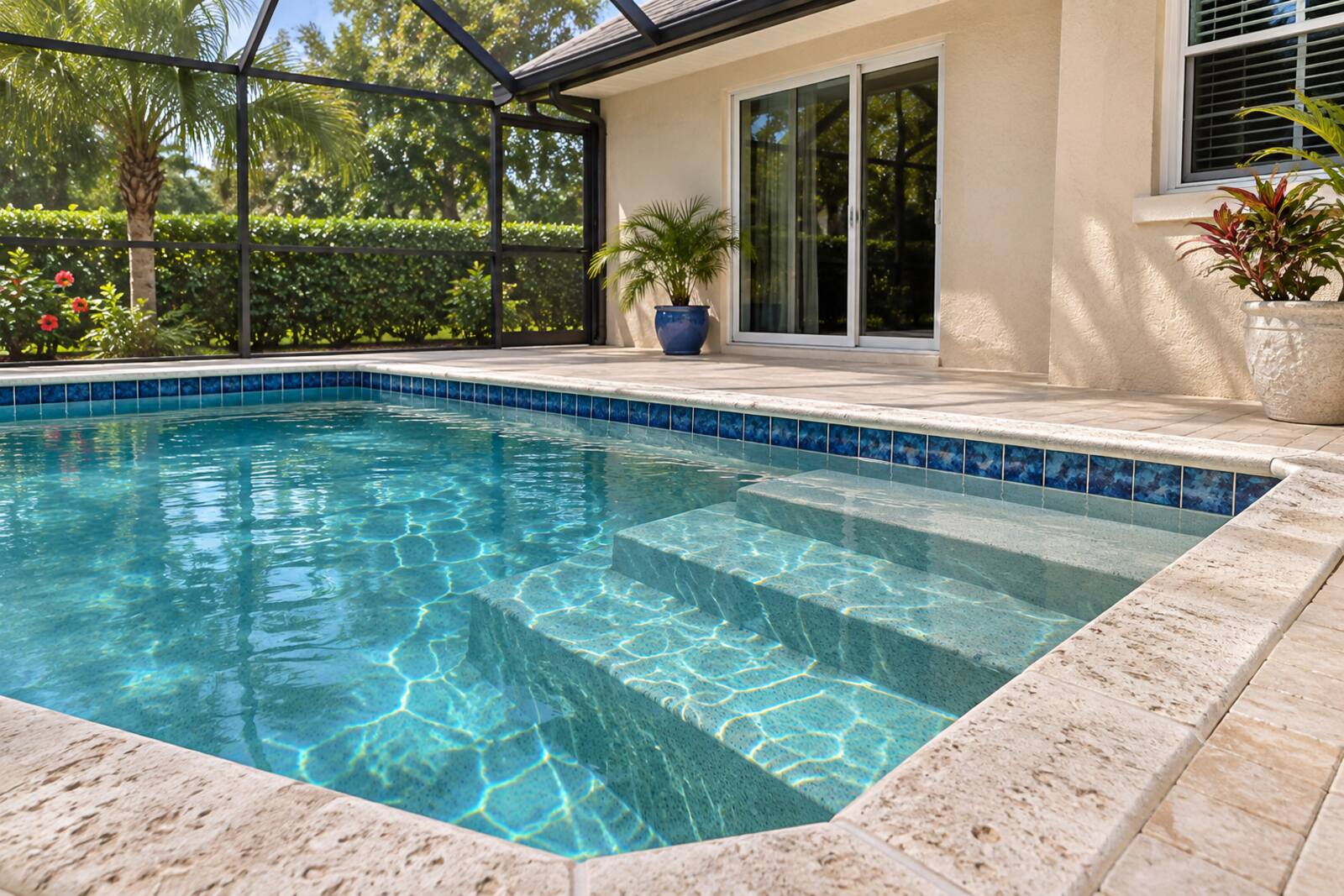
- The 48-inch barrier rule. Every new pool, spa, or hot tub needs a permanent barrier at least 48 inches above grade on the outside face, per County Code 8C-4, County Code 33-12, and Florida Statutes 515.27. A screened patio counts as a barrier, which is one reason screen enclosures are near-universal here.
- Inspections before concrete. The first plumbing inspection happens after excavation, steel, bonding, and the main drain — before shotcrete — and piping must hold a pressure test before it is covered.
- In the city proper, contractors must be registered with the City of Miami and hold a local Business Tax Receipt before pulling permits, so a builder's city registration is a fair first question.
Lots, soil and climate
Miami sits on Miami Limestone — the oolitic rock that underlies nearly all of the metro (Florida Museum) — so excavators here routinely cut through rock rather than dig loose sand, and the shallow water table means dewatering on many lots. The trade-off is genuinely year-round swimming: no heater is strictly needed in Miami, and the busy building season runs through summer. Because Miami-Dade and Broward form the state's High-Velocity Hurricane Zone under Florida Building Code Sections 1615–1626 (floridabuilding.org), screen enclosures and any glazing near the pool must use impact-rated products that carry product approval under Section 1626 — ordinary replacements from other states cannot be used.
What drives the price and what to ask
- Rock excavation: sawing or hammering limestone adds machine hours that sandy counties never see.
- Dewatering: a high water table can require pumps through the dig and the pour.
- HVHZ engineering: wind-rated enclosure design and approved impact products cost more than standard Florida specs.
- Tight access: small lots and zero-lot-line backyards can rule out larger equipment and standard fibreglass shells.
- Salt air: coastal lots go through pumps and heaters faster, so equipment choice and placement matter.
Questions to ask each custom pool builder:
- Will you pull the pool permit plus the electrical and plumbing sub-permits, and are you registered with the City of Miami if my address is inside city limits?
- Is my lot likely to hit rock, and is rock excavation and dewatering priced into the contract or billed as an extra?
- Does your screen enclosure design use Miami-Dade-approved, impact-rated products for the hurricane zone?
- How does my 48-inch barrier requirement get met — screen enclosure, fence, or wall — and who permits it?
- Can your equipment fit my access, and what is the plan if it cannot?
- What corrosion-resistant equipment do you spec for coastal lots, and what does the warranty cover here?
- Is financing available, and is the schedule realistic for a summer completion?