Building a custom pool in Ocala
Ocala, seat of Marion County in north-central Florida (population 73,305), sits between Gainesville and Orlando. Custom inground pools are common across master-planned communities, horse country estates, and historic neighborhoods near downtown east of Interstate 75. Inland geography reduces coastal surge concerns, but sandy soils over porous limestone and seasonal water tables shape excavation, shell engineering, and equipment choices.
Permits and local codes
Pool construction in Ocala falls under the City of Ocala or Marion County, depending on parcel jurisdiction:
- The City of Ocala Growth Management — Construction Permits office directs applicants to submit permits through the eTrakit portal (or at 201 SE 3rd St., 2nd floor) for plan reviews and inspections.
- Marion County Building Safety FAQs confirm that pools 24 inches or deeper require building permits, with child barriers and electrical systems meeting Florida Building Code.
- Staged inspections (pre-pour, rough plumbing, rough electrical, and final) are standard across city and county jurisdictions.
Key regulatory items to confirm:
- Setbacks: Marion County and City of Ocala zoning apply accessory-structure setbacks to swimming pools. Because required setbacks vary by zoning classification and recorded subdivision plat, verify boundary requirements with the local building division.
- Pool safety features: Under the Florida Residential Swimming Pool Safety Act (s. 515.27, Florida Statutes), a new residential pool must meet at least one of five safety features to pass final inspection and receive a certificate of completion: (a) a barrier meeting s. 515.29 (at least 4 feet high with outward-opening, self-closing, self-latching gates); (b) an approved safety pool cover; (c) exit alarms rated 85 dB A at 10 feet on doors and windows with direct pool access; (d) self-closing, self-latching devices on direct-access doors with release mechanisms at least 54 inches above the floor; or (e) an in-pool alarm certified to ASTM Standard F2208.
- Subdivision plats: Area subdivisions frequently enforce recorded plat restrictions that tighten setbacks, restrict pools to rear yards, or mandate HOA architectural approval.
- Notice of Commencement: A Notice of Commencement must be recorded with the Marion County Clerk of Court and posted on-site for projects valued over $5,000 before work starts.
- Electrical and plumbing: Separate trade permits are required under the Florida Building Code and coordinated within the building permit package.
Lots, soil and water table
Ocala sits on rolling terrain characterized by sandy loam, porous Ocala Limestone overlain in places by Hawthorn Group clays, and red clay on higher ground. The area's karst topography also warrants sinkhole awareness in excavation planning:
- Excavation: Sandy surface soil digs easily, but Ocala Limestone ledge can appear unexpectedly during excavation on some parcels, requiring mechanical rock-breaking equipment.
- Water table / dewatering: Seasonal rain can raise groundwater in low-lying lots. Wellpoint dewatering is sometimes needed during excavation and steel placement; ask whether it is included.
- Shell design: Concrete shells in karst terrain benefit from hydrostatic relief valves in the main drain sump to prevent shell uplift when groundwater rises.
- Drainage: Lot grading and deck swales are critical to direct storm runoff away from the pool shell and equipment pad.
Swim season and climate
Ocala offers a longer build window than the panhandle, though winters are cooler than south Florida:
- Swim season: May through October provides warm water; winter temperatures drop into the 50s, making a heat pump or gas heater common for extended use.
- Build window: October through April offers dry, stable curing conditions. Summer thunderstorm season (June through September) can flood open excavations and delay plaster.
- Frost risk: Brief freezes can occur in January; contractors should plan freeze protection for exposed plumbing during cold snaps.
What drives pool cost and what to ask
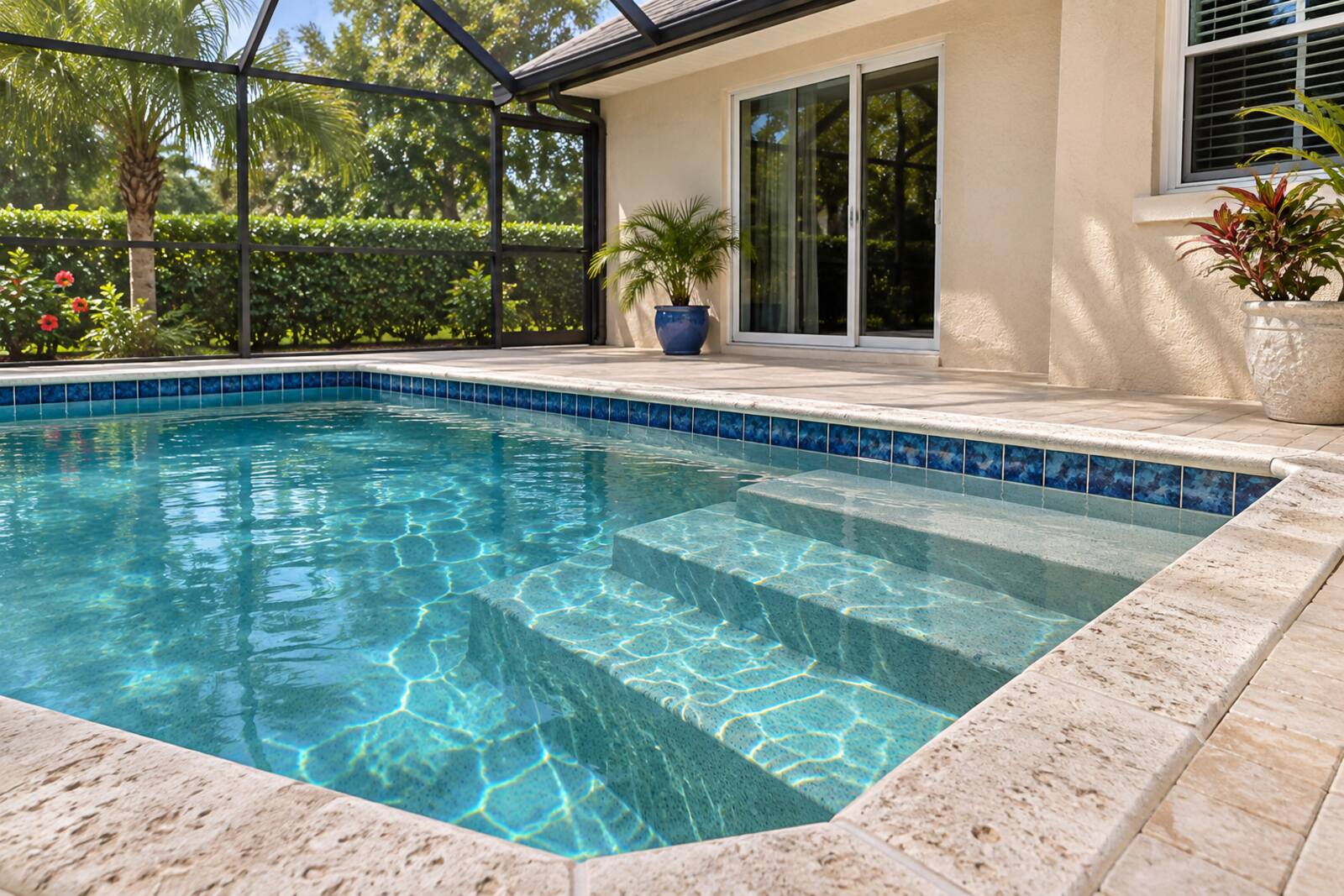
Costs reflect limestone excavation, seasonal dewatering, and enclosure options. Premium finishes (travertine coping, waterline tile, automation) and screen cages are standard upgrades.
Questions to ask builders:
- Do you submit permit applications through the City of Ocala eTrakit portal or Marion County Building Safety division and manage all inspections?
- Have you verified recorded subdivision plat restrictions and HOA review requirements?
- Is wellpoint dewatering included if high groundwater appears during the dig?
- How is unexpected limestone rock breaking billed?
- Does your quote include all required site and boundary surveys for permitting?
- Which Chapter 515 safety feature is included in your quote, and who installs it?
- Do you record the Notice of Commencement and coordinate trade permits?
- What written structural warranty covers the shell, finish, plumbing, and equipment?