Building a pool in Pembroke Pines
Pembroke Pines, about 179,000 people on the western edge of Broward County, is a planned city built almost entirely out of the former Everglades — flat and low, with drainage handled by district infrastructure rather than natural fall. The city is largely built-out, so most pool projects here are backyard additions to existing homes rather than part of new construction, and the city's own Building Department runs permitting from its pages on ppines.com.
Permits and local rules
Pembroke Pines publishes a Swimming Pool & Spa Permit Checklist alongside its Permits page and Building Department page. The essentials:
- The HOA affidavit is mandatory even with no HOA. A Homeowners Association Affidavit of Awareness must be submitted "even if you do not belong to an Association," along with an Affidavit of Landscape Compliance and a Utility Easement Hold Harmless Agreement.
- Plans must be professionally sealed. Signed and sealed drawings by a licensed design professional, a survey showing setbacks and location, and the Residential Swimming Pool, Spa or Hot Tub Safety Act form are all required at submission.
- Six disciplines review the plans: building, electrical, mechanical, plumbing, zoning, and engineering, as the checklist lists them.
- The building fee is a percentage. Under the city's building fee schedule, the building permit fee is 3.79% of construction cost for jobs from $2,500 up to $1,000,000, with a flat minimum below that and separate trade fees on top — a number worth knowing when you compare quotes.
- Drainage district sign-off. If the lot sits in the South Broward Drainage District, an SBDD permit release is required before the city permit proceeds.
- NOC before the first inspection. A Notice of Commencement must be recorded, submitted, and displayed before the first inspection is scheduled for any non-mechanical project with a job value over $5,000.
- Fences are separate. A sub-permit may be required for the fence or barrier, so ask who pulls it.
Lots, soil and climate
The ground here is former wetland: flat as a table, with a water table that sits close to the surface year-round, so dewatering through the dig and the shell pour is close to a certainty rather than a contingency. Pembroke Pines sits inside the High-Velocity Hurricane Zone that Broward shares with Miami-Dade under the 2023 Florida Building Code, 8th Edition (floridabuilding.org), so enclosures need wind-rated, impact-tested products.
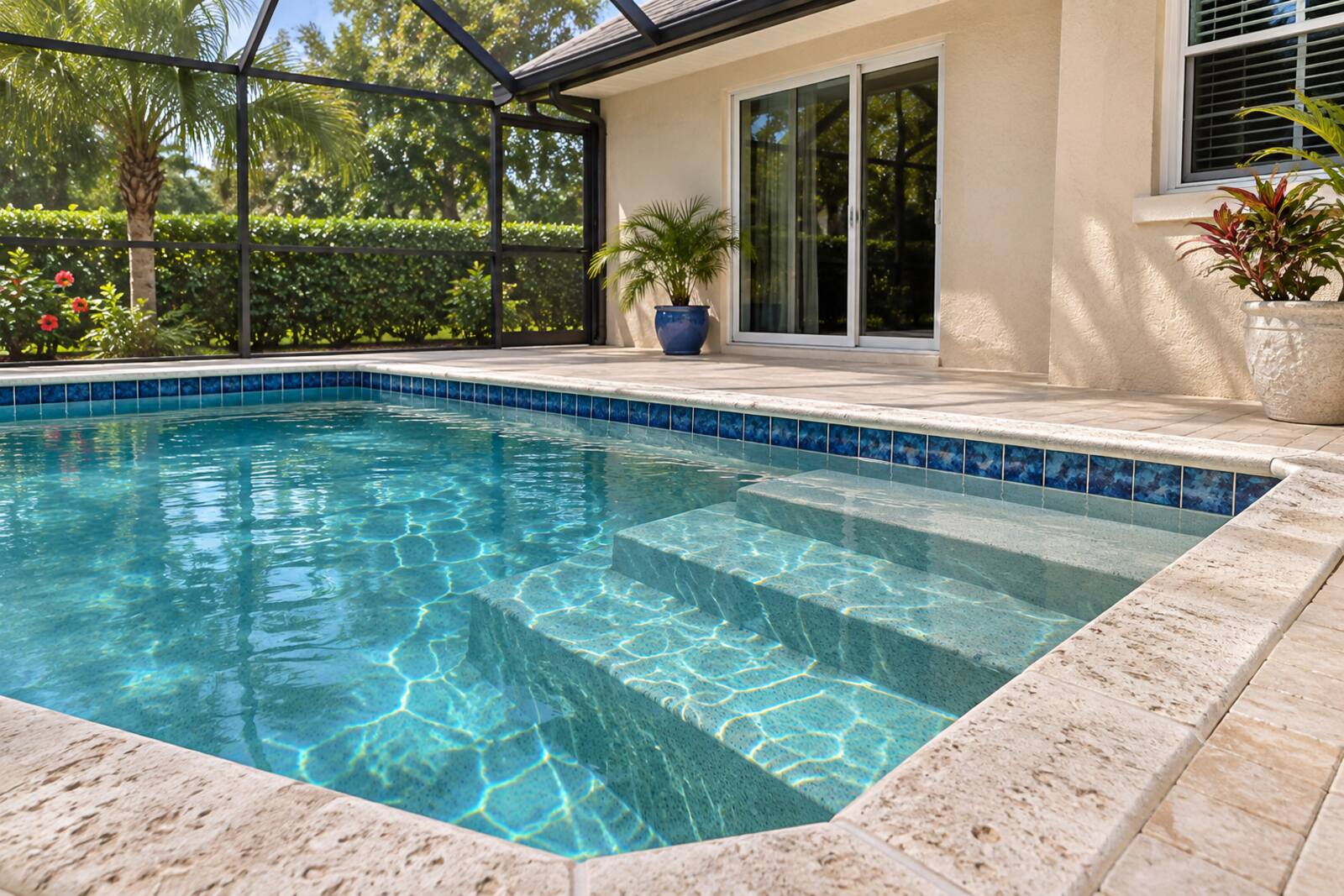
Swimming is genuinely year-round, and most pools here get screen enclosures — partly for bugs, partly because an enclosure that isolates the pool is one of the barrier options under Florida Statutes 515.27. Hurricane season (June through November) is the scheduling risk: enclosure fabricators and inspection queues back up after named storms.
What drives the price and what to ask
- Dewatering and rock: budget for pumps and disposal on every dig, and ask what happens to the price if the excavator hits rock.
- HOA approval: architectural-review timelines vary by community and can add weeks before the city application even files.
- Enclosure: near-standard in Pembroke Pines, and HVHZ-rated ones are a significant share of the total project cost.
- Permit fees and plan reviews: the six-discipline review and the percentage-based permit fee mean permit cost and lead time belong in the quote conversation.
- Drainage district lots: SBDD release requirements can extend timelines.
Questions to ask each custom pool builder:
- Will you prepare the sealed plans, survey package, safety act form, and all six plan reviews, and how long do your Pembroke Pines permits usually take?
- Does your quote include dewatering — and what happens to the price if the dig hits rock?
- Will you handle my HOA's architectural review submission and the required city HOA affidavit?
- If my lot is in the South Broward Drainage District, who obtains the SBDD release?
- Does your enclosure quote use HVHZ-approved, impact-rated products?
- What is included versus excluded, given the city's building permit fee is 3.79% of construction cost over $2,500, plus trade fees?
- How does your warranty treat the shell, the finish, and the equipment, and who services the pool after the final inspection?