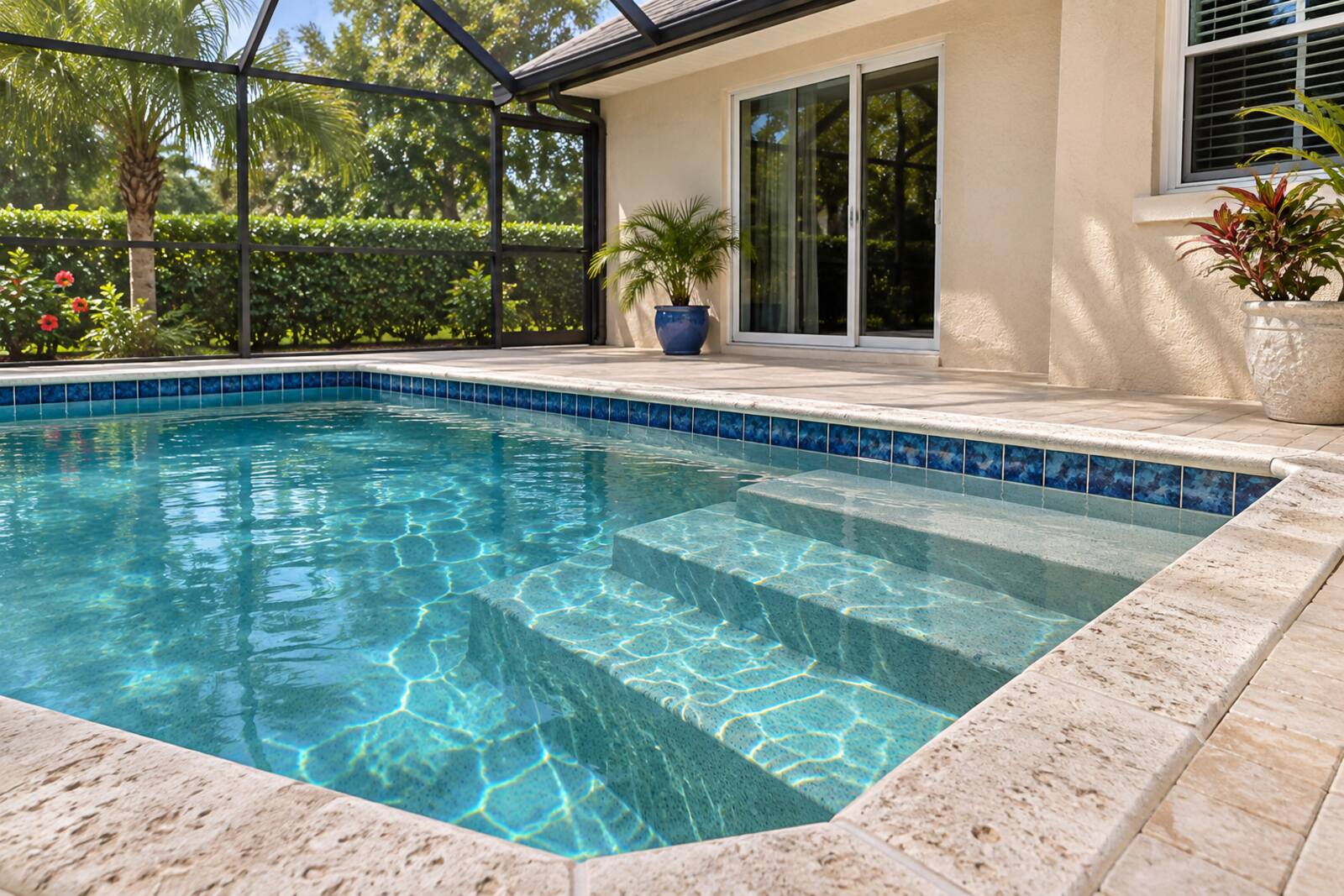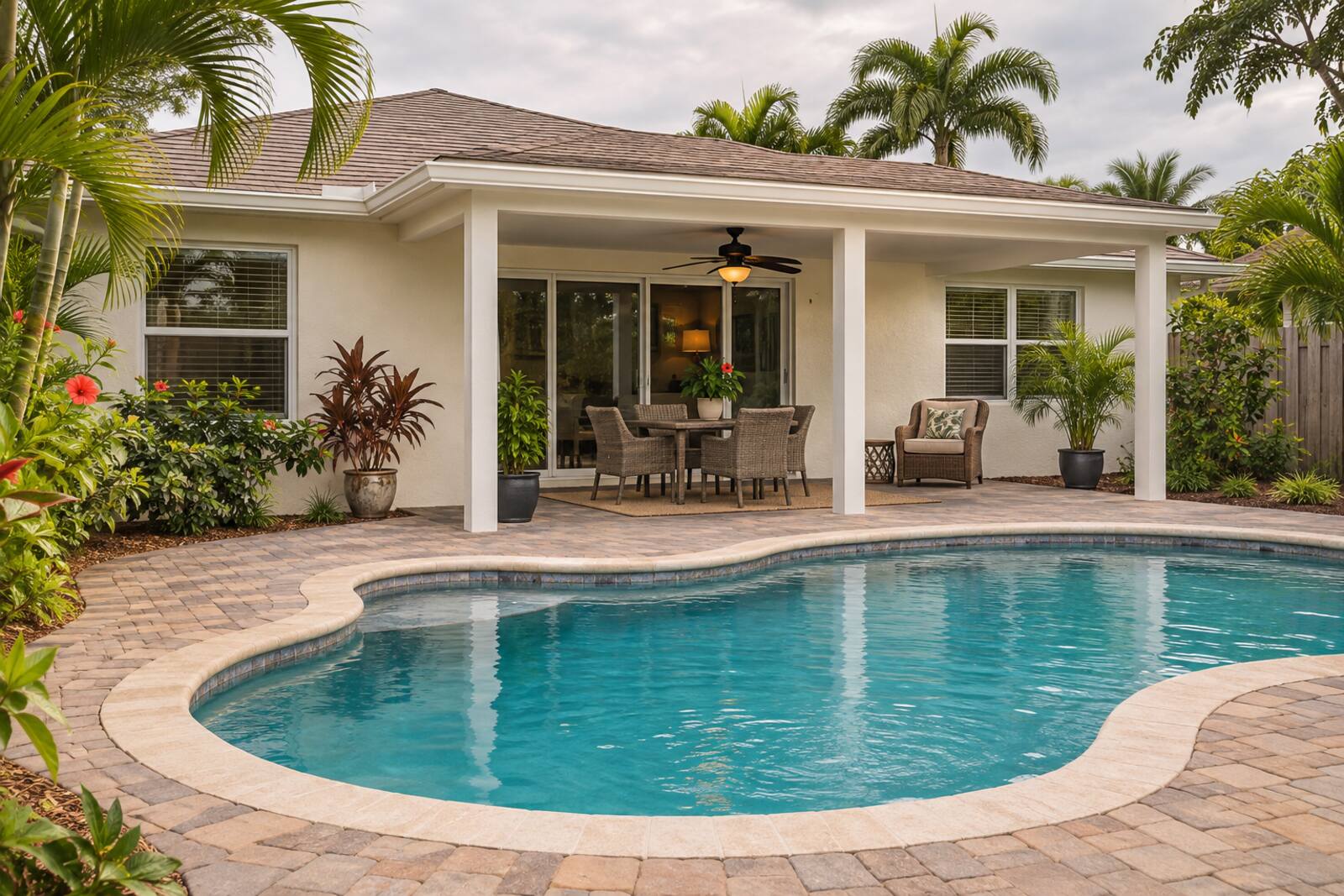
Building a custom pool in Pensacola
Pensacola, seat of Escambia County in Florida's panhandle (population 53,634), sits on Pensacola Bay near the Gulf of Mexico. Neighborhoods range from historic North Hill near downtown, to waterfront communities along Bayou Texar, to newer inland subdivisions. Custom inground pools here balance panhandle seasonal temperature swings, coastal salt exposure, and sandy soils that shift from loose along the bay to firm further inland.
Permits and local codes
Pensacola pool permitting depends strictly on whether the parcel sits inside city limits or in unincorporated county territory:
- Within city limits, the City of Pensacola Building Inspections Division (located at City Hall, 222 W Main St) oversees plan reviews, permits, and inspections via the MyGovernmentOnline (MGO) portal. Submittals include a scaled site plan, boundary survey, and engineering plans where applicable.
- For parcels in unincorporated Escambia County, Escambia County Building Services reviews applications, requiring a scaled site plan with property setbacks, engineering documentation, and a pool safety affidavit.
- All inground pools require building, electrical, and plumbing permits under the Florida Building Code, plus flood-zone elevation review for parcels bordering Pensacola Bay or bayous.
Key regulatory items to confirm:
- Jurisdiction: Verify whether the property is inside City of Pensacola limits or unincorporated Escambia County, as permitting portals, fee schedules, and setback rules differ.
- Site plan and survey: A scaled site plan displaying dimensions, pool location, and boundary setbacks along with a certified property survey is mandatory across city and county jurisdictions.
- Engineering: Loose sandy soils near the water and coastal wind zones often require stamped engineering calculations for structural shells and enclosures.
- Pool safety features: Under the Florida Residential Swimming Pool Safety Act (s. 515.27, Florida Statutes), every new residential swimming pool must meet at least one of five safety features to pass final inspection and receive a certificate of completion: (a) a barrier meeting s. 515.29 (at least 4 feet high with outward-opening, self-closing, self-latching gates); (b) an approved safety pool cover; (c) exit alarms rated 85 dB A at 10 feet on doors and windows with direct pool access; (d) self-closing, self-latching devices on direct-access doors with release mechanisms at least 54 inches above the floor; or (e) an in-pool alarm certified to ASTM Standard F2208.
- Setbacks: Accessory-structure setbacks apply to pools under City of Pensacola Land Development Regulations and the Escambia County Land Development Code. Specific distances depend on zoning classifications and recorded subdivision plats.
- Subdivision plats: Area subdivisions frequently specify mandatory rear-yard pool placement or require HOA architectural committee approval prior to permitting.
- Flood zone / elevation: Bayfront and low-lying lots may fall in FEMA flood hazard zones, requiring elevated equipment pads and flood-resistant shell engineering.
- Notice of Commencement: A Notice of Commencement must be recorded with the Escambia County Clerk of Court and posted on-site before construction begins.
Lots, soil and water table
Pensacola sits on the Gulf Coastal Plain, underlain by the deep sand-and-gravel aquifer (including the Citronelle Formation and overlying sands) rather than near-surface limestone. Deep clay confining layers separate surface soils from deep Floridan limestones hundreds of feet down:
- Near-bay lots: Saturated, moisture-sensitive sand with high water tables; excavation walls can collapse without shoring, and wellpoint dewatering is frequently required during digging.
- Inland parcels: Inland ground features firmer sand and gravelly soils from the Citronelle Formation, avoiding shallow bedrock but requiring careful compaction.
- Salt and wind: Marine air near Pensacola Bay accelerates corrosion; pumps, heaters, and fasteners should be rated for coastal durability.
- Deck drainage: Because lots are often flat, deck grading and swales must be planned so heavy rains do not pool against the pool shell or flood adjacent lots.
Swim season and climate
Pensacola features a humid subtropical panhandle climate with distinct seasonal variation:
- Swim season: May through October offers warm swimming conditions; unheated pools cool significantly from November through March, making heaters or heat pumps standard for extended use.
- Build window: March through November offers productive construction weather. Winter cold snaps in December through February can slow concrete curing.
- Freeze protection: Sub-freezing temperatures occasionally occur in January; contractors must protect plumbing lines during curing.
- Hurricane season: June through November; screen enclosures and pool equipment pads must be engineered to withstand Florida Building Code wind loads.
What drives pool cost and what to ask
Costs reflect wind-rated enclosures, dewatering in sandy high-water-table soils, and heating systems suited for panhandle winters. Custom finishes like travertine, LED lighting, and spas are common additions.
Questions to ask builders:
- Do you verify whether our property is inside City of Pensacola limits or unincorporated Escambia County before permitting?
- Do you provide the scaled site plan, boundary survey, and stamped engineering calculations in the base quote?
- Is wellpoint dewatering included if high groundwater is encountered on bay-adjacent lots?
- Are screen enclosures engineered and stamped for local coastal wind loads?
- How are unexpected subsoil issues, like buried muck or running sand, handled and billed?
- Does the quote include all required site and boundary surveys for permitting?
- Which Chapter 515 safety feature is included in your quote, and who installs it?
- Do you record the Notice of Commencement and coordinate trade permits?
- What written structural warranty covers the shell, finish, plumbing, and equipment?