Building a custom pool in Plantation
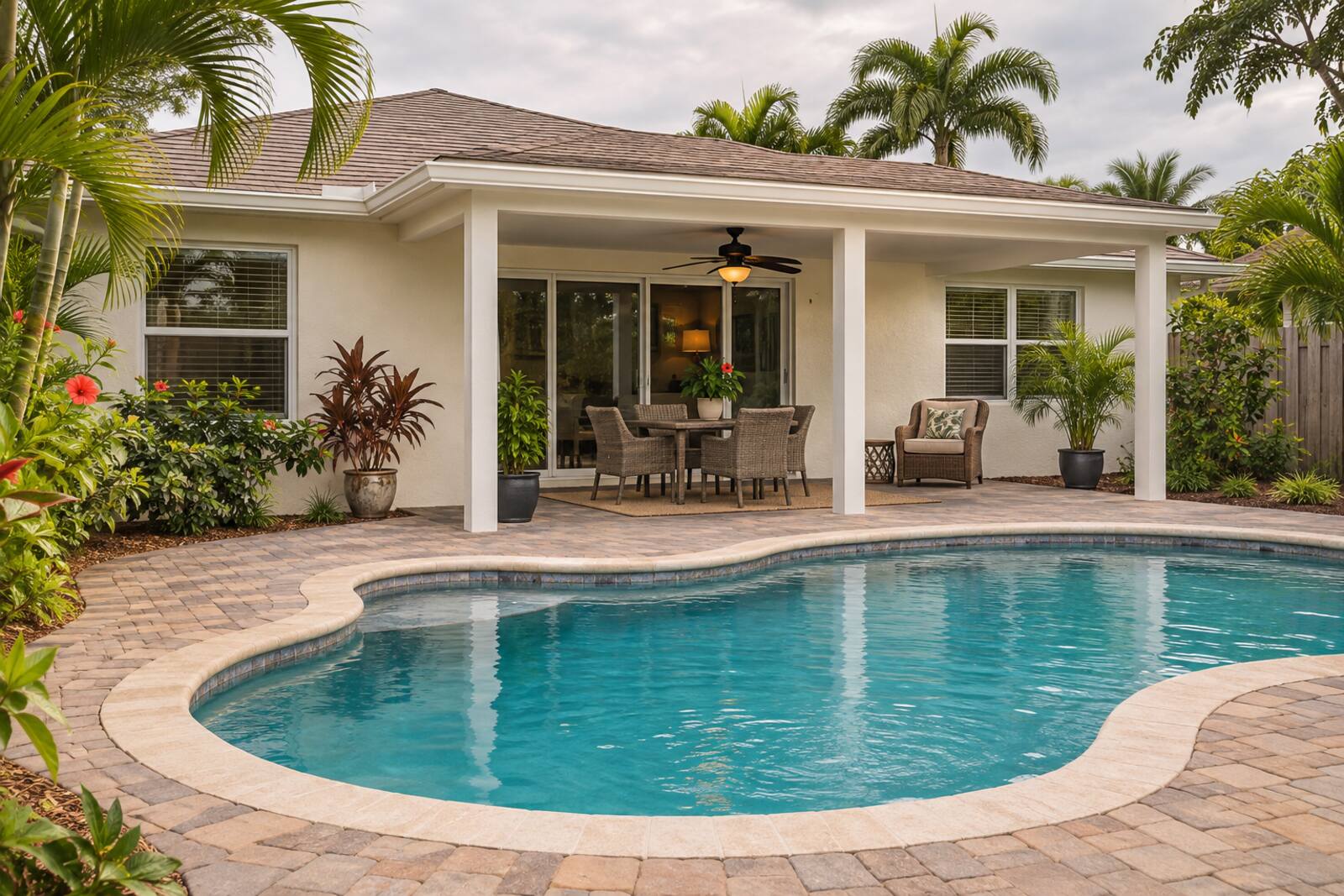
Plantation is an established residential community in central Broward County just west of Fort Lauderdale, celebrated for its mature tree canopies, extensive canal waterways, and neighborhoods ranging from acreage estates in Plantation Acres to master-planned communities like Jacaranda and Hawks Landing. A custom inground swimming pool is a natural centerpiece for backyards in Plantation, allowing homeowners to embrace South Florida's year-round outdoor lifestyle. Whether designing an expansive geometric pool with a sun shelf and spillover spa or a compact tropical plunge pool, building here requires navigating local zoning setbacks, canal maintenance easements, high seasonal water tables, and Broward County's High-Velocity Hurricane Zone (HVHZ) building codes.
Permits and local codes
Swimming pool construction in the City of Plantation is regulated under the Florida Building Code and local municipal codes enforced by the City of Plantation Department of Building Safety:
- Department information and regulatory guidelines are accessible through the City of Plantation Department of Building Safety.
- Online permit submittals and inspection scheduling are handled via the Plantation Accela Citizen Access Portal.
Key regulatory requirements include:
- Zoning Setbacks: Under Plantation's Land Development Regulations, swimming pools, spas, and decks are classified as accessory structures. They are prohibited within front yard setbacks and cannot be located forward of the primary residence. Side and rear setbacks depend on your zoning district and lot layout; confirm the exact distances with the city before design.
- Canal and Waterway Setbacks: Many properties in Plantation back up to drainage canals governed by local water control authorities, such as the Old Plantation Water Control District. Inground pools, decking, and screen enclosures must stay back from the canal bank or seawall as the city and the water control district require; ask which district serves your lot, since district review or a hold-harmless agreement may apply.
- Easements: No pool shell, permanent concrete deck, or screen structure may encroach into dedicated utility, drainage, or canal maintenance easements.
- High-Velocity Hurricane Zone (HVHZ): Broward County is designated as an HVHZ region. Screen enclosures, pergolas, and pool equipment pads must carry signed and sealed structural engineering calculations demonstrating compliance with HVHZ wind-load requirements.
- Pool Safety Features: Under the Residential Swimming Pool Safety Act (Chapter 515, Florida Statutes), a new residential pool must have at least one of five safety features to pass final inspection (s. 515.27): a barrier at least 4 feet high with outward-opening, self-closing, self-latching gates (s. 515.29); an approved safety cover meeting ASTM F1346 (s. 515.25); exit alarms rated 85 dB A at 10 feet on doors and windows that open directly to the pool; self-closing, self-latching devices on those doors with the release at least 54 inches above the floor; or a pool alarm certified to ASTM F2208. Ask which feature your quote includes and who installs it.
- Notice of Commencement: Before the first inspection, a Notice of Commencement must be recorded with the Broward County Records, Taxes and Treasury Division and posted at the construction site.
Lots, soil and water table
Plantation sits on flat coastal terrain with a shallow water table sitting close to the surface due to the canal network and proximity to the Everglades. During the summer wet season, groundwater levels rise significantly. Inground pool excavations typically require active wellpoint dewatering systems to keep trenches stable during construction. Concrete gunite and shotcrete shells must include hydrostatic relief valves in main drain sumps to prevent empty pool shells from lifting out of saturated soil.
The soil profile in Plantation consists of sand and organic deposits over porous limestone. Encountering solid limestone ledge during excavation is common in certain areas, requiring mechanical hydraulic rock breakers. Mature live oaks and royal palms across the city mean designs often need to work around their root protection zones.
Swim season and climate
Plantation enjoys a tropical South Florida climate that supports an 11-to-12-month swim season. Summer water temperatures stay naturally in the upper 80s, but winter cold fronts from December through February drop unheated pool water into the 60s. Homeowners seeking comfortable winter swimming typically install an electric heat pump or gas heater.
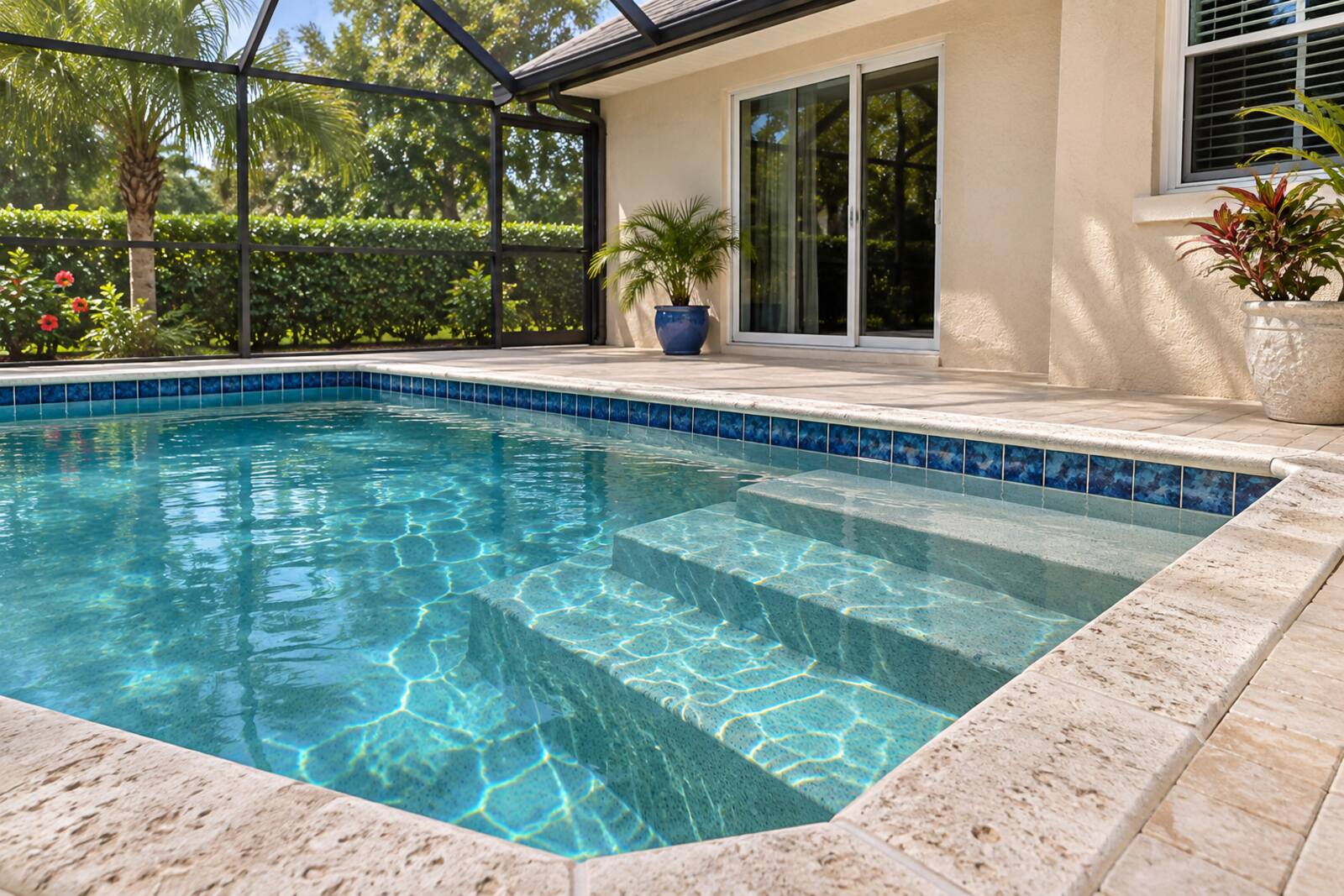
Screen enclosures (pool cages) are widely installed across Plantation to guard against seasonal mosquitoes and falling debris from mature trees. The primary building season runs through the dry winter and spring months (November through May). The summer rainy season brings frequent afternoon storms and tropical weather that can flood excavations and delay concrete pours and plaster finishes.
What drives pool cost and what to ask
Custom pool pricing in Plantation is influenced by HVHZ screen enclosure engineering, wellpoint dewatering systems during excavation, rock breaker work if limestone ledge is struck, canal authority reviews, and luxury upgrades like travertine decking, waterline glass tile, and smart automation systems.
Questions to ask each custom pool builder:
- Do you manage all permit applications through the Plantation Department of Building Safety and coordinate any required water control district reviews?
- How do you manage shallow groundwater on our lot, and is wellpoint dewatering included in the base excavation price?
- Does your contract include hydrostatic relief valves installed in the main drain?
- How are rock breaking and limestone removal fees structured if hard rock is struck during digging?
- Are your screen enclosures and equipment installations engineered and stamped for Broward County HVHZ wind standards?
- How does your site plan preserve protected tree root zones and adhere to canal and property line setbacks?
- Who records the Broward County Notice of Commencement and coordinates the final safety-feature inspection?
- What written structural warranties do you provide on the concrete gunite shell, interior plaster, plumbing, and equipment?