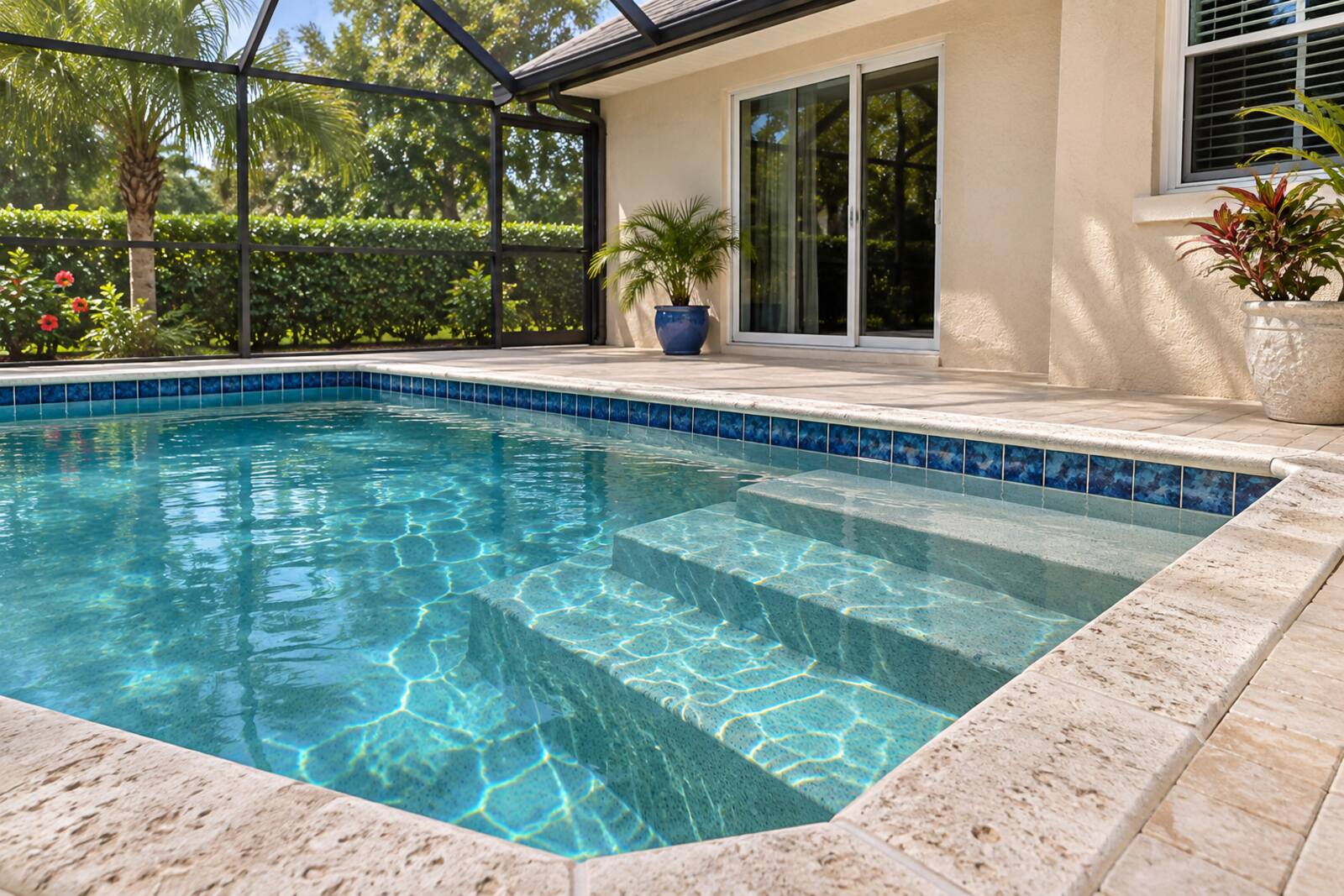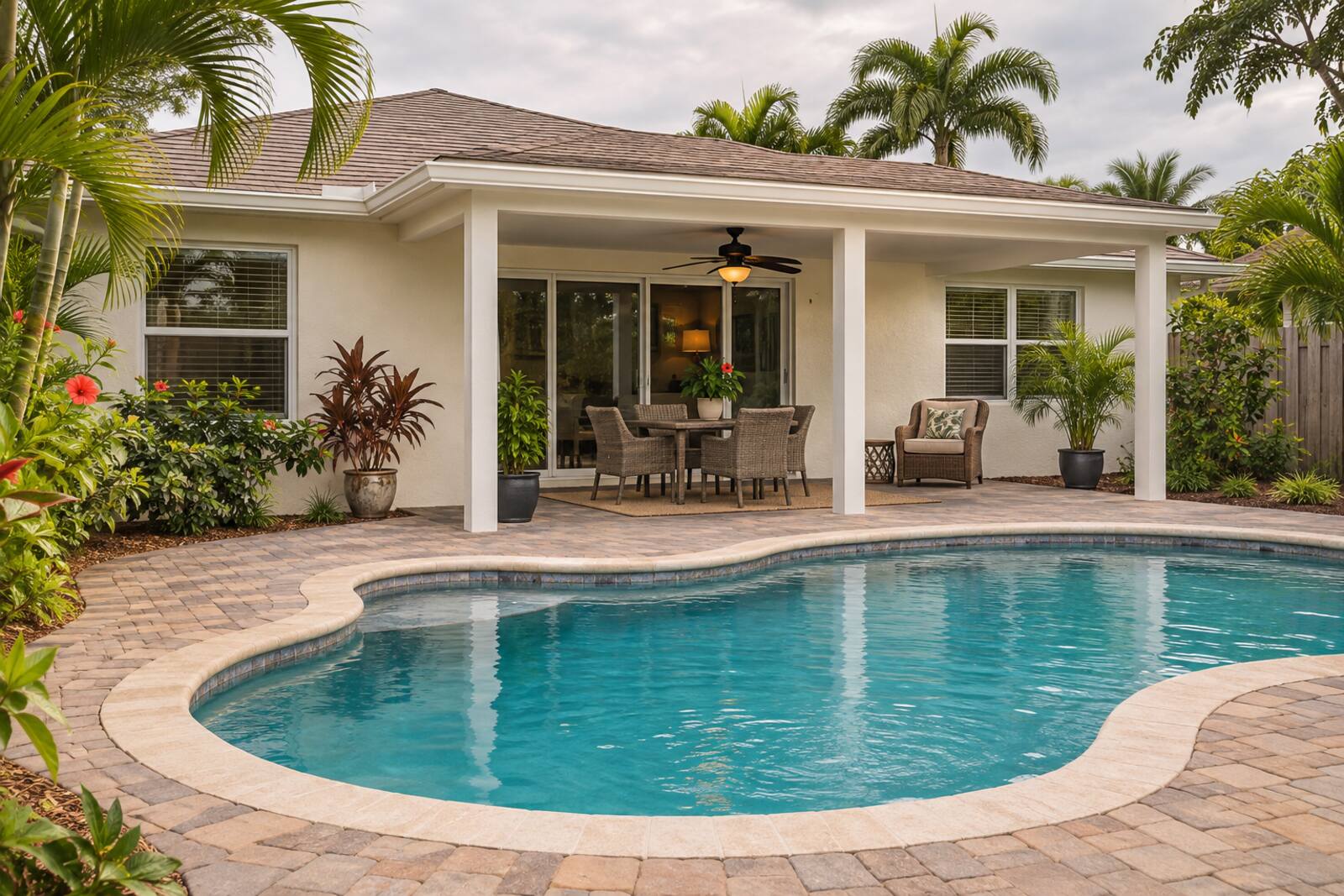
Building a pool in Port St. Lucie
Port St. Lucie is a growing city on Florida's Treasure Coast, with newer residential subdivisions like Tradition and St. James, waterfront neighborhoods near the St. Lucie River, and a mix of single-family homes on lots that range from compact suburban parcels to larger canal-front properties. For a buyer considering a custom inground pool here, the key local factors are the city's building permit process, the sandy soil and high groundwater common across St. Lucie County, and a year-round swim season that still calls for careful winter planning.
Permits and bylaw rules
The City of Port St. Lucie Building Department requires a building permit for every new inground pool. Before applying, the homeowner or builder must have a new signed and sealed survey completed by a Florida licensed surveyor, showing property lines, setbacks, and the proposed pool location (In-Ground Pool checklist). The city's Building Forms & Documents page lists the specific pool-related applications: an In-Ground Pool Permit Application, a Pool Barrier Permit, a Pool Heater Permit, and a Pool Renovation/Modification Permit when altering an existing pool. Licensed contractors apply and pay through the City's Contractor E-Permits Portal. A homeowner acting as their own builder must apply in person and have their signature notarized at the Building Department (Building Online Services). The City's Residential Permit Fee Schedule (effective May 2022) lists an in-ground pool permit at $550 ($535 if filed online), plus a $35 child-safety-barrier fee for a new pool. Check the current schedule with the Building Department before you budget. Florida law requires the pool's safety feature to be in place before it can pass final inspection. Ask your builder how the site will be secured during construction.
Lots, soil and climate
The St. Lucie River watershed is characterized by low land elevations, high groundwater tables, and low soil storage capacity. Soils in Port St. Lucie are mostly sandy. They range from dry ridge sands to flatwoods sands with a high seasonal water table. Check the USDA Web Soil Survey for your lot, and ask your builder how they will handle groundwater and backfill. In neighborhoods closer to the St. Lucie River or within designated wetland buffers, a builder should expect dewatering during excavation and should check the lot's FEMA flood zone and any mapped wetlands (FEMA Flood Map Service Center) before breaking ground. Standard residential setbacks in Port St. Lucie are enforced through the zoning review; buyers should confirm the exact setback distances for pools, enclosures, and equipment pads with the City before finalizing a design.
Port St. Lucie's climate is warm year-round; winter days are usually in the 70s, and January nights average in the low 50s, with colder nights during cold fronts. That gives the area a long outdoor swim season — typically March through November for unheated pools — but winter cold snaps still make pool heaters or heat pumps common choices for families who want consistent use from December through February. Heavy summer rainfall (May through October) can delay excavation and concrete work, so scheduling around the dry season often shortens the build timeline.
What drives the price and what to ask
Key cost factors in Port St. Lucie include:
- Groundwater and soil conditions: Sandy soil makes excavation quick in dry weather but may require continuous dewatering and stone bedding near the water table. Canal-front and wetland-adjacent lots add both complexity and cost.
- Permit process: The City takes a new pool as one permit. The heater, enclosure and safety barrier designs, and the electrical, plumbing and gas sub-contractor applications, all go in with the pool permit, along with a signed and sealed survey. Confirm your builder prepares the whole package.
- Safety features: To pass final inspection, Florida law (F.S. 515.27) requires at least one safety feature. The options are a barrier at least 4 feet high whose gates are self-closing and self-latching, an approved safety cover, exit alarms on doors and windows that open to the pool, self-closing doors to the pool, or a certified pool alarm. The City asks for your choice on a notarized Safety Barrier Affidavit.
- Flood and wetland checks: Lots near the St. Lucie River, local canals, or designated wetlands may need additional county or state-level approvals.
- Rain season scheduling: Summer thunderstorms can delay concrete pours and excavation; many builders prefer to schedule shell construction during the drier winter and spring months.
Questions to ask each custom pool builder:
- Do you prepare the signed and sealed survey and the full pool permit package, including the barrier, heater and electrical sub-permits?
- How do you manage high groundwater or sandy soil conditions on this specific lot? Is site dewatering included in the base quote?
- What setbacks apply to this property for the pool, enclosure fence, and equipment pad — and will you verify them with the City before design?
- Is temporary construction fencing included, and who schedules the final barrier inspection?
- What pool heater or heat pump options do you recommend for year-round use in this climate, and how does that affect operating cost?
- How does your warranty address soil settlement or groundwater movement on sandy Treasure Coast lots?