Building a custom pool in Sarasota
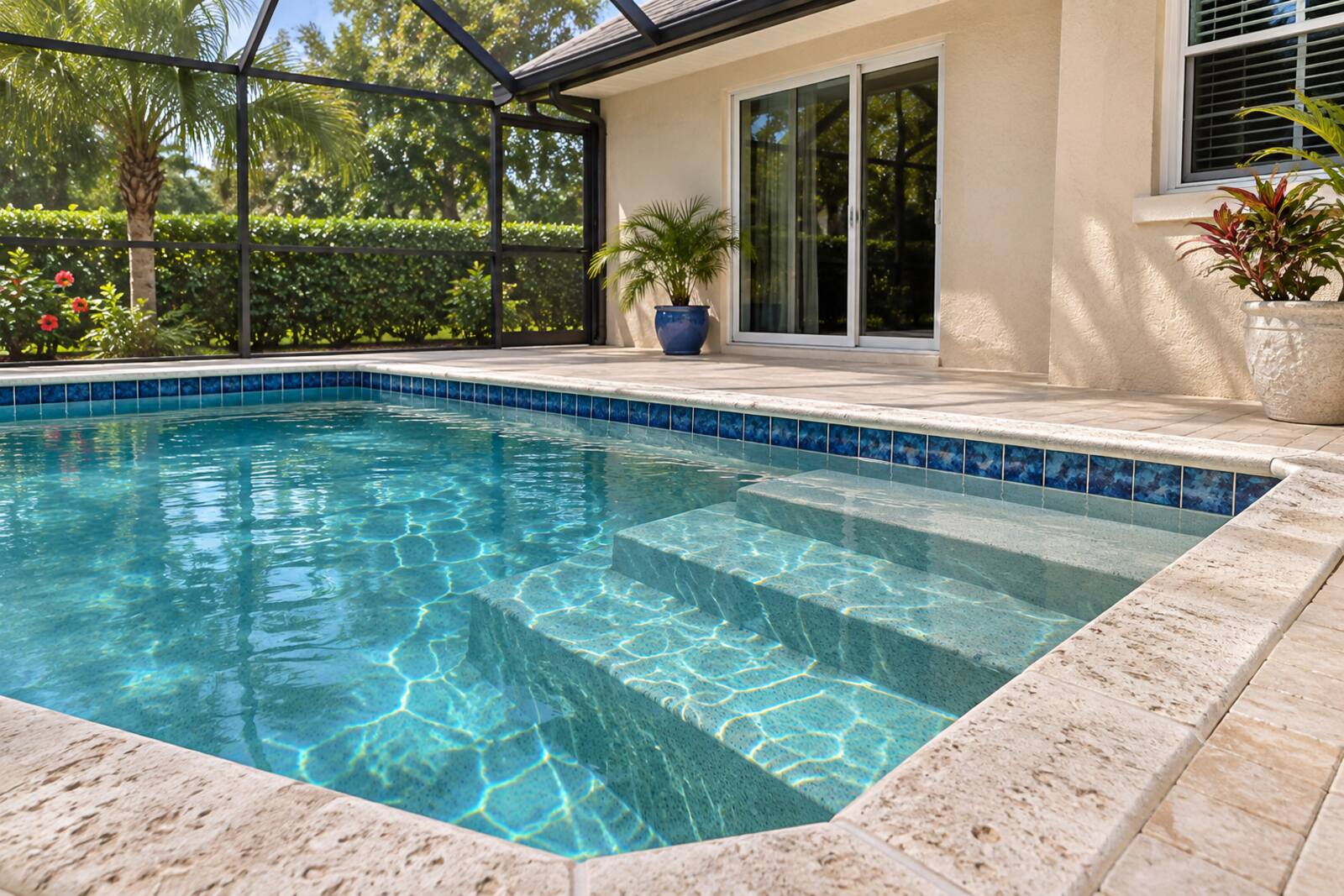
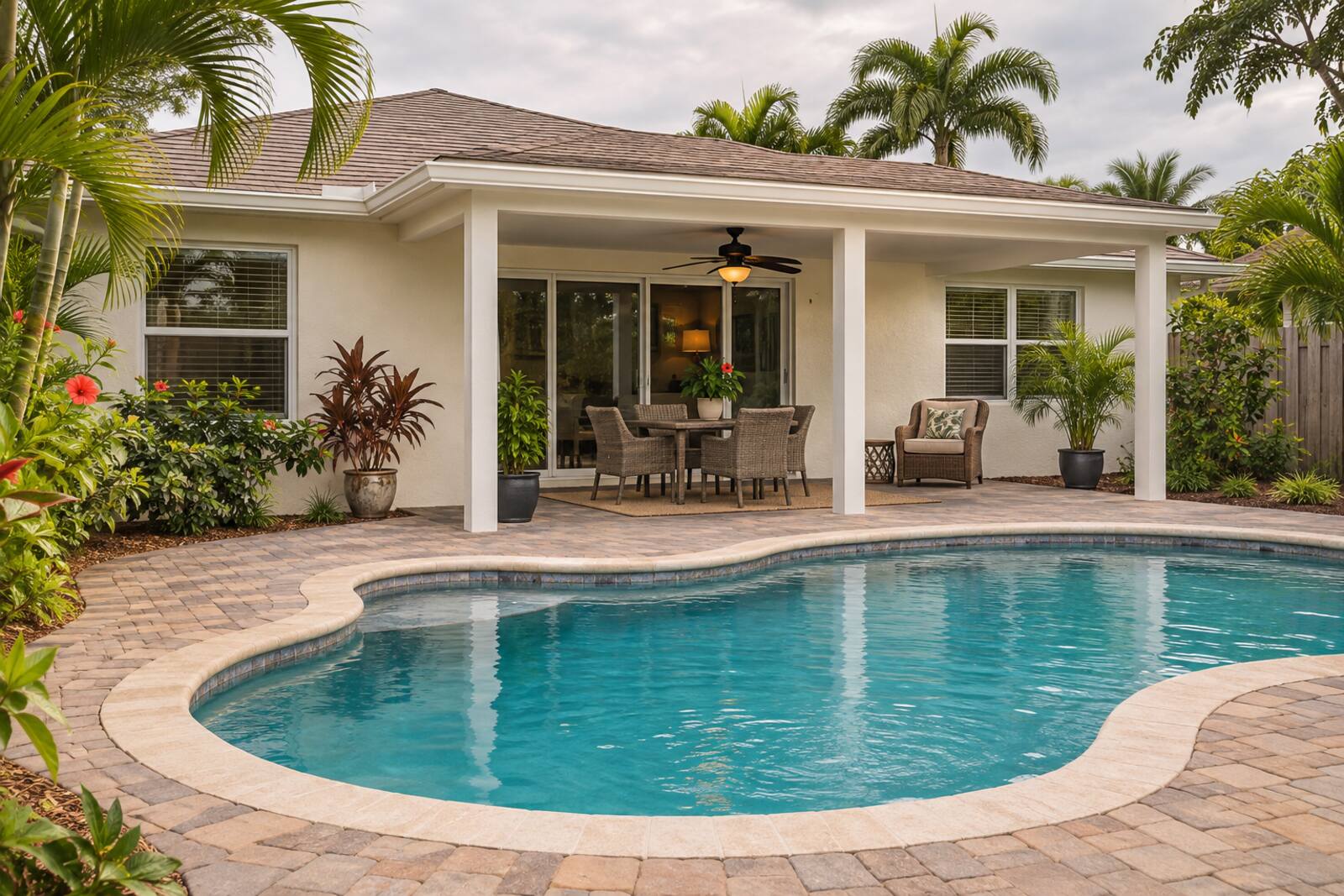
Sarasota, seat of Sarasota County on Florida's Gulf coast (population 59,096), combines waterfront estates along Sarasota Bay with greater Sarasota communities like Lakewood Ranch and Palmer Ranch, alongside historic bungalows near downtown. Custom inground pools are central to outdoor living here — designed around coastal sunsets, spas, and screen enclosures engineered for high winds.
Permits and local codes
Sarasota operates under city and county building divisions depending on parcel jurisdiction:
- The City of Sarasota's Building & Permitting Division guides permits and inspections; the city's Ordinance No. 23-5473 sets pool location rules — swimming pools without cages may be located in all yards, but only in front yards if screened from the street by a six-foot finished solid wall or solid fence (front-yard pools are prohibited in DTN, RSM-9, and RTD-9 zone districts), while swimming pools with cages must be located behind the front facade of the primary building in the side or rear yard.
- Sarasota County Planning and Development / Building Services requires a scaled site plan, property survey, pool safety affidavit, engineering calculations, and a Notice of Commencement for county parcels. Coastal properties may need flood-zone review.
- Staged inspections (pre-pour, rough plumbing and electrical, structural, final) are required across both jurisdictions.
Key regulatory items to confirm:
- Setbacks and placement: Confirm whether the lot is in City of Sarasota or Sarasota County jurisdiction. In the city, Ordinance No. 23-5473 governs placement: uncaged pools in front yards require a six-foot solid wall or fence (outside DTN, RSM-9, and RTD-9 zones), while caged pools must sit behind the primary building's front facade. In unincorporated Sarasota County, accessory-structure setbacks apply based on zoning district and environmental buffers.
- Subdivision plats: Communities such as Lido Shores and Palmer Ranch often enforce recorded plat restrictions mandating rear-yard placement or HOA architectural review.
- Flood zones: Coastal and bayfront lots frequently lie in AE or VE flood zones, requiring flood-resistant construction and equipment elevated above base flood elevation.
- Pool safety features: Under the Florida Residential Swimming Pool Safety Act (s. 515.27, Florida Statutes), every new residential swimming pool must meet at least one of five safety features to pass final inspection and receive a certificate of completion: (a) a barrier meeting s. 515.29 (at least 4 feet high with outward-opening, self-closing, self-latching gates); (b) an approved safety pool cover; (c) exit alarms rated 85 dB A at 10 feet on doors and windows with direct pool access; (d) self-closing, self-latching devices on direct-access doors with release mechanisms at least 54 inches above the floor; or (e) an in-pool alarm certified to ASTM Standard F2208.
- Wind engineering: Screen enclosures must be signed and sealed by a Florida engineer to meet Florida Building Code wind loads.
- Notice of Commencement: Must be recorded with the Sarasota County Clerk and posted on-site before work starts.
Lots, soil and water table
Sarasota's coastal geology features sandy overburden, a shallow seasonal water table in the surficial sand aquifer recharged by rainfall, and localized limestone bedrock:
- Excavation: Digging is straightforward through sand, but limestone bedrock can occur at shallow depths on some lots, requiring mechanical rock breakers. Near the bay, soft organic soils can require shoring.
- Groundwater: Rain and tidal influence raise the surficial water table. Wellpoint dewatering or sump pumping during excavation is common; verify if included in the quote.
- Hydrostatic relief: Hydrostatic relief valves in the main drain sump help prevent shell uplift when groundwater rises behind the concrete shell.
- Salt air: Coastal properties experience marine air; equipment pads and hardware should specify coastal-grade, corrosion-resistant materials.
Swim season and climate
Sarasota enjoys a subtropical climate supporting near year-round swimming:
- Swim season: Comfortable most months; water temperatures only dip significantly in January and February, when pool heaters or heat pumps maintain usability.
- Build window: October through May provides dry, reliable curing conditions. Summer thunderstorm season (June through September) can flood excavations and delay plaster.
- Hurricane season: June through November; build schedules should account for storm buffers and secure open sites before peak activity.
What drives pool cost and what to ask
Costs reflect wind-rated enclosures, flood-zone elevation, corrosion-resistant fixtures, and possible limestone breaking or dewatering. Vanishing edges, spas, and travertine decking are popular custom options.
Questions to ask builders:
- Do you confirm municipal jurisdiction (City vs. County) and check recorded plat and HOA requirements before design?
- Under Ordinance 23-5473, is front-yard placement allowed on our lot, and does the quote include the required six-foot screening wall or solid fence?
- Are screen enclosures engineered and stamped for local Florida Building Code wind speeds?
- Is wellpoint dewatering included if high groundwater is encountered?
- How is unexpected limestone rock breaking billed?
- Does the quote include all required boundary, spot, and elevation surveys for permitting?
- Which Chapter 515 safety feature is included in your quote, and who installs it?
- Do you record the Notice of Commencement and manage all inspection milestones?
- What written structural warranties cover the shell, finish, plumbing, and equipment?