Building a custom pool in St. Cloud
St. Cloud sits on the south shore of East Lake Tohopekaliga in Osceola County, one of the fastest-growing parts of Central Florida, with about 78,000 residents. The city blends an older grid of streets near the lake and U.S. 192 with newer subdivisions and acreage to the east. A St. Cloud mailing address is not the same as city jurisdiction: Narcoossee and Harmony are unincorporated, so some addresses permit through Osceola County instead of the city. Confirm which building department has the parcel before design starts.
Permits and local rules
The City of St. Cloud Building Department issues its own Swimming Pool permit application, separate from the county's. The package is more than a set of plans: it includes a notarized application, a Notice of Commencement recorded at the Osceola County Courthouse for projects valued at $5,000 or more, a Swimming Pool Barrier Affidavit, and a Residential Swimming Pool, Spa and Hot Tub Notice of Requirements. A final survey affidavit is also part of the closeout.
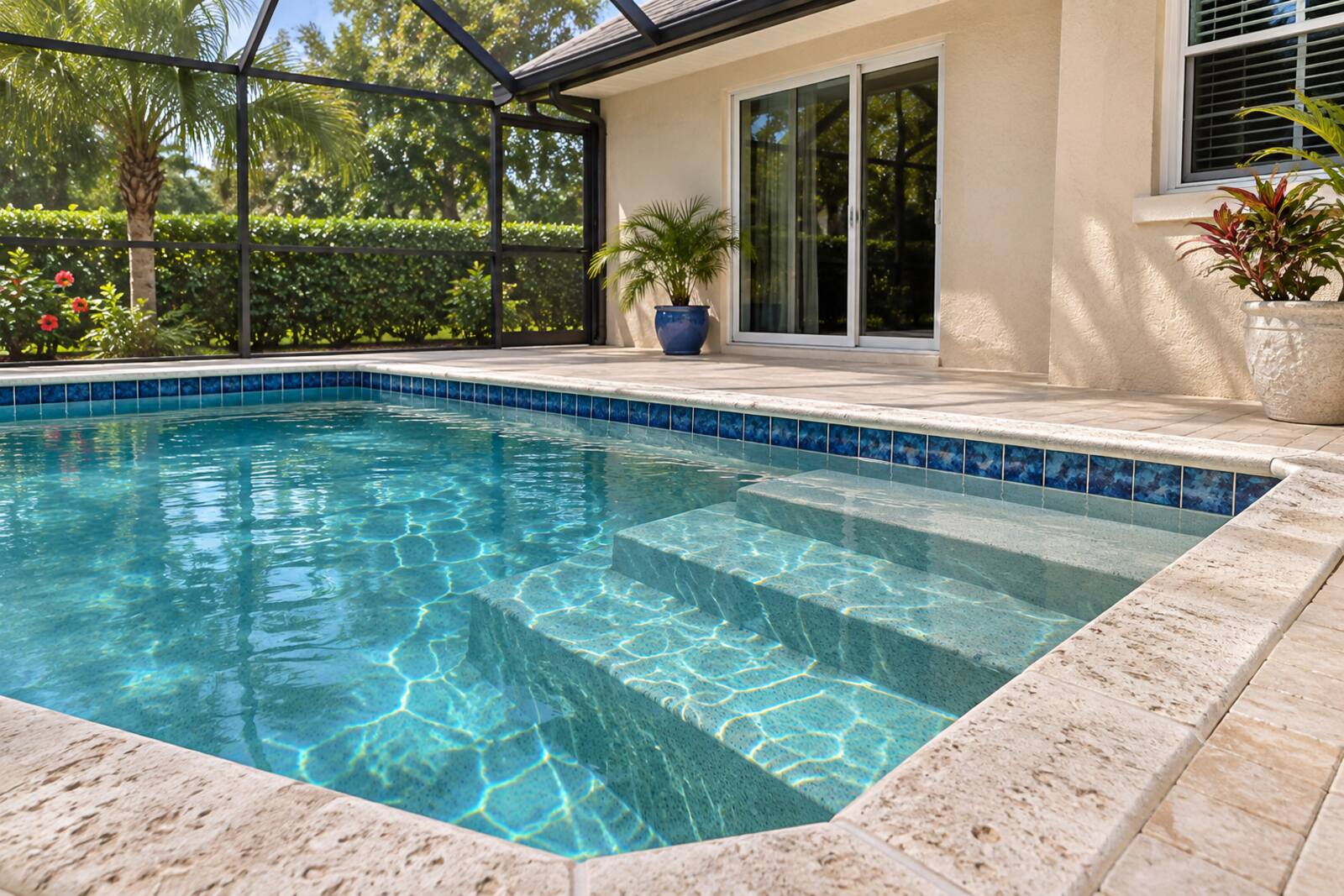
The barrier form follows Florida Statutes 515.29 and the Florida Building Code: choose an ASTM F1346 safety cover, a mesh safety barrier, a screen enclosure, or a barrier with pedestrian gates meeting the code's dimensions. Where dwelling walls form part of the barrier, the plans must add door and window exit alarms, self-closing and self-latching devices mounted 54 inches above the threshold, or an ASTM F2208 pool alarm. The city builds under the 8th Edition Florida Building Code and lists an ultimate design wind speed of 140 mph, which drives product approvals and enclosure engineering.
Lots, soil, water and season
Central Florida's flat, sandy, poorly drained soils and seasonally high water table are the defining site conditions here. Lakefront lots on East Lake Tohopekaliga and Alligator Lake add waterfront setbacks, grading and drainage design, and groundwater that can sit close to the surface. Newer subdivisions can bring narrow lots, side-yard access limits and drainage swales that have to be preserved, and most communities add a homeowner association architectural review on top of the permit.
Swimming is possible much of the year, but unheated water turns cool in winter. The steadiest construction window is the drier winter and spring. The summer wet season and hurricane season, June through November, can pond water on a flat lot, flood an excavation and hold up inspections.
What drives the price and what to ask
Price in St. Cloud is driven by dewatering and drainage work, lake or wetland setbacks, HOA review, screen enclosure engineering for the city's wind speed, deck and finish choices, and the longer permit reviews that come with a fast-growing jurisdiction.
Questions to ask each custom pool builder:
- Is my parcel inside St. Cloud city limits or unincorporated Osceola County, and which department will you permit with?
- Will you file the notarized pool application, the Notice of Commencement and the barrier affidavit, or is any of that left to me?
- Is dewatering included, and how will the design handle a seasonally high water table?
- If the lot is on a lake or canal, who confirms the waterfront setback and drainage requirements?
- Does your enclosure or screen design meet the city's 140 mph wind requirement, and are the products approved?
- Which barrier option will the plans show, and who installs the alarms or self-latching devices if the house wall is part of it?
- What equipment and finish package do you recommend, and what does the warranty cover?
- How do you schedule around the wet season and HOA review?